The heavy scoreline in Curaçao’s first World Cup match against Germany hurt Dick Advocaat. The national coach gave a realistic assessment of the defeat in Curaçao’s first ever World Cup match, which ended 7-1.
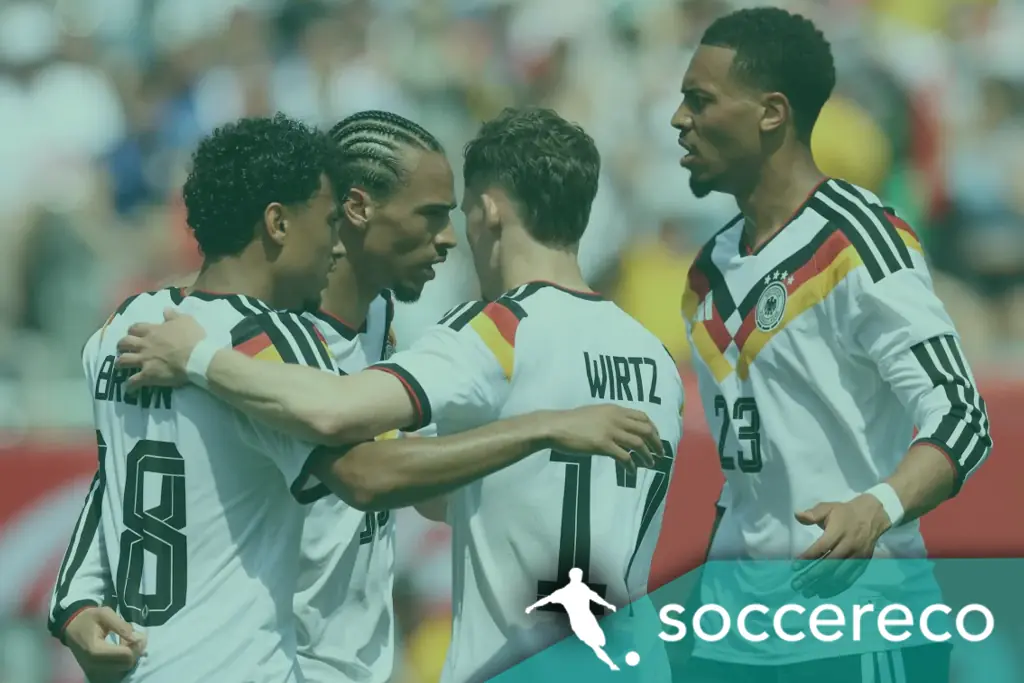
Germany punish Curaçao as Advocaat faces painful World Cup reality
Germany started their World Cup campaign with a commanding 7-1 victory over Curaçao, a result that underlined the enormous gap in experience, individual quality and tournament rhythm between one of international footballs traditional powers and one of the proud debutants of the competition.
For Curaçao, this was a historic night before it became a painful one. The occasion itself carried huge emotional weight. Playing a first ever World Cup match is the kind of moment that can define a generation of players, staff and supporters, and Dick Advocaat clearly understood the scale of it. Before kick-off in Houston, the veteran coach was visibly emotional, wiping his eyes as the national anthem and the sense of achievement hit home.
But once the match began, the emotion quickly turned into a demanding lesson at the highest level. Germany were sharper, quicker and more ruthless in the decisive moments, while Curaçao struggled to cope with the tempo and precision of an opponent widely viewed as one of the teams capable of going deep in the tournament.
Advocaat did not try to hide from the reality of the scoreline after the final whistle. Speaking to NOS, he admitted that the difference in level was visible and that not every Curaçao player looked fully comfortable with the speed and demands of World Cup football. His assessment was honest, direct and typical of a coach who has spent decades at the highest level of the game.
He accepted that losing to Germany was not, in itself, the biggest issue. Curaçao knew before the match that this would be one of the most difficult fixtures they could face. Germany have greater depth, more international experience and individual quality across every area of the pitch. The real frustration for Advocaat was not simply the defeat, but the manner of it.
The Curaçao coach felt his team made life too easy for Germany at key moments. Several goals, in his view, came from situations that could have been defended better. Against a side of Germanys calibre, small mistakes are rarely forgiven. Curaçao discovered that in the harshest possible way, with each lapse punished by a team that looked comfortable, confident and clinical.
Advocaat said that a 4-1 defeat could be accepted in the circumstances, but felt that 7-1 was too heavy. That comment summed up the balance of his reaction. He was realistic enough to recognise the quality of Germany, but disappointed enough to know that Curaçao had contributed to the size of the defeat through avoidable errors and moments of weakness.
For a team making its first appearance on this stage, the emotional and tactical challenge was enormous. Curaçao were not only facing Germany; they were facing the intensity of the World Cup, the pressure of a global audience, the weight of history and the speed of elite tournament football. That combination can overwhelm even experienced teams, and for a debutant nation it can become brutal very quickly.
There were moments when Curaçao tried to play with courage, but Germanys superiority was clear. The German players moved the ball with more authority, attacked spaces more naturally and showed the kind of composure that comes from competing regularly at the highest international and club levels. Curaçao, by contrast, often had to defend under pressure and found it difficult to control the rhythm of the match.
Still, Advocaat was keen not to reduce the night to humiliation alone. His message after the game was also about learning. Curaçao still have two group matches to play, and the experience gained against Germany could be important if the players are able to respond with maturity. The coach stressed that his squad now understands more clearly what this level demands.
That point matters. For Curaçao, qualification for the World Cup 2026 already represents a major achievement. The team has come a long way to reach this stage, and one painful defeat does not erase that progress. However, the match against Germany showed that reaching the World Cup and competing consistently within it are two very different challenges.
Advocaat also pointed to individual quality. He admitted that Germanys players are, individually, better than his own. It was not said as an excuse, but as a simple football reality. Germany have players used to pressure, major tournaments, Champions League nights and elite domestic competitions. Curaçao have talent and pride, but they are still learning what it means to compete at this level as a collective.
The most concerning part for Advocaat was that not every player reached his own maximum. Against opponents like Germany, that is fatal. Curaçao needed every player to perform close to his best, to stay disciplined, to avoid cheap mistakes and to compete with full concentration for the entire match. Once that level dropped, Germany had too much quality not to exploit it.
The result will hurt, but it may also serve as a reference point. Curaçao now know the standard. They know how quickly spaces close, how costly poor decisions can be and how little time there is to recover after losing concentration. These are difficult lessons, but they are also part of the growth process for a side appearing on the World Cup stage for the first time.
For Advocaat personally, the night carried mixed emotions. Becoming the oldest national coach ever at a World Cup is a remarkable milestone, especially while leading a debutant nation into history. Yet his competitive instinct meant he could not simply enjoy the occasion. The pride of being there was real, but so was the disappointment of seeing the scoreline become so heavy.
The challenge now is psychological as much as tactical. Curaçao must recover quickly, because the tournament does not allow much time for regret. The players will need to absorb the lessons from the Germany match without allowing the result to damage their confidence completely. Their World Cup is not over. In many ways, it now truly begins.
The next match against Ecuador will be crucial. It offers Curaçao the chance to show a response, to be more compact, more focused and more resilient. The team will need to defend with greater discipline, manage the game more calmly and avoid giving away the kind of easy goals that left Advocaat so frustrated in Houston.
After Ecuador, Ivory Coast will be the final opponent in the group stage. That means Curaçao still have opportunities to compete, to improve and to give their supporters moments to remember. The opening night was painful, but it was also the first chapter of a historic journey.
Germany, meanwhile, leave the match with the kind of result that strengthens confidence early in a tournament. A 7-1 win sends a message, even if stronger tests will follow. For Curaçao, the same scoreline sends a different message: the World Cup is unforgiving, and pride alone is not enough against the best teams in the world.
Advocaat knows that better than anyone. His reaction was not dramatic, but it was clear. Curaçao can accept losing to Germany. What hurt him was the scale of the defeat and the avoidable nature of some of the goals. If his players can take that message into the next two matches, the painful debut may still become a valuable turning point rather than just a heavy defeat.