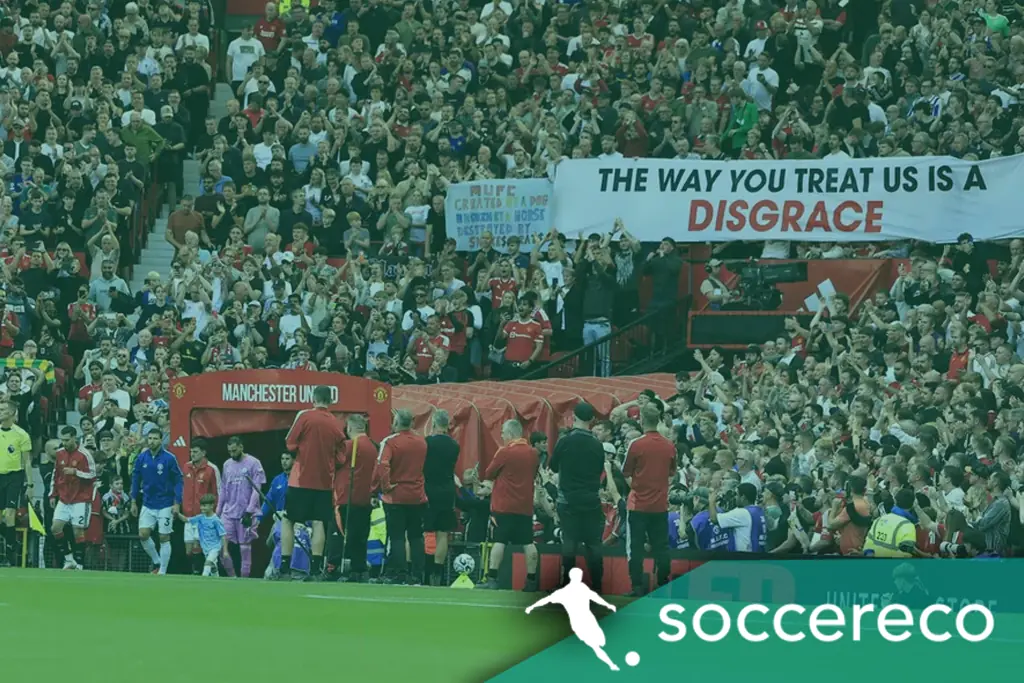
Mainz 05’s stadium is almost sold out for the match against Samsunspor. Despite the many fans of the Turkish club, Stefan Bell believes there will be a home-game atmosphere, in which he wants to achieve something historic.

Mainz 05 go into Thursday night’s Conference League fixture against Samsunspor with a rare mix of excitement and pressure, the kind that only appears when a club senses it is one result away from changing its European story.
The Mewa Arena is close to sold out, and the anticipation has been building for days, not only because of the opponent and the travelling support expected from Turkey, but because Mainz know exactly what is on the line: the chance to reach the round of 16 of a European competition for the first time in their history.
Stefan Bell, one of the most experienced figures in the squad, has framed the occasion as a moment the club and supporters have waited for. The stadium is expected to be full in both the home and away sections, with an atmosphere that should feel more like a European night than a routine fixture. There is an awareness that Samsunspor will be strongly backed, but within the Mainz camp there is no fear that the away end will dominate the evening. For Bell, the key point is not which set of supporters is louder in isolation, but that Mainz have already shown in this European run that their own fans can drive the team through difficult spells, especially in matches that carry a sense of novelty and significance.
That significance is clear in the qualification scenario. If Mainz win, they secure their place in the March knockout round and remove the uncertainty that comes with a February play off. If they do not, the calendar becomes harsher, with two extra knockout matches in February and the added risk of a difficult draw complicating both domestic and European priorities. UEFA’s draw on Friday will define the next steps for several teams, but Mainz would rather avoid being part of that conversation by finishing the job at home.
Urs Fischer’s approach in the build up has balanced ambition with realism. Mainz arrive with recent evidence that they can compete at a high level, even when disrupted by injuries. Their 2 to 2 draw away to Bayern Munich, achieved without Nadiem Amiri due to muscular issues, served as a reminder that they can stay organised under pressure and still find ways to hurt elite opponents. The timing now matters: Amiri is expected to return, which gives Fischer an important option for ball progression, tempo control, and set piece delivery. In a match where small moments can decide everything, the availability of a player who can connect midfield lines and deliver quality in the final third is a meaningful boost.
There is also guarded optimism around Silvan Widmer. The wing back has been working back from the injury he picked up against Lech Poznan and remains a doubt, but even the possibility of his involvement affects the tactical picture. Mainz rely heavily on the intensity and timing of their wide players in a back five system, not only to create crossing situations but to manage transitions when possession is lost. A fully fit Widmer would strengthen both phases, especially against an opponent that thrives when the game opens up.
Not every injury situation is moving in the right direction. Robin Zentner and Phillipp Mwene are not expected to be ready for Thursday, with Fischer indicating only a small chance that they might return in time for Sunday’s league match against FC St. Pauli. That makes squad management more complex, particularly if Mainz want to play with proactive wing backs and keep their pressing intensity high. Further back, Anthony Caci and Maxim Leitsch are ruled out for the remainder of the 2025 football year, removing depth and experience from the defensive unit. Sota Kawasaki is also expected to remain unavailable until January after suffering a calf injury in Munich. For Fischer, this means the match day plan must be built around the players who are fit, while still protecting the team’s overall structure.
Samsunspor arrive as a well drilled opponent with a clearly defined identity. Their commitment to a 4 3 3 shape provides fixed reference points across the pitch, and Fischer has been explicit about the dangers they pose on the break. A 4 3 3 can become especially dangerous against a back five when the wide forwards attack the space behind the wing backs, or when the central striker pins the middle centre back and opens passing lanes for midfield runners. Mainz will need disciplined distances between lines and careful decisions about when to commit numbers forward.
This tactical tension is one of the most interesting elements of the evening. In Munich, Mainz opted for a more conservative 5 4 1, prioritising compactness and protecting central zones against Bayern’s movement. For the Conference League and the Bundesliga, the expectation is that Mainz return to a 5 3 2, a shape that gives them two forwards to press and threaten the space behind the opposition’s back line. That switch is not purely about attacking intent. It also changes how Mainz defend transitions, because a front two can press the first pass and force play wider, allowing the midfield three to hold their positions rather than being dragged into emergency chasing.
If Mainz do line up in a 5 3 2, the roles of the central midfielders will be decisive. They must balance forward runs with protection, particularly if Samsunspor’s front three try to isolate defenders in wide channels. Amiri’s possible return matters here because he can help Mainz sustain possession for longer periods, reducing the number of transition situations and forcing Samsunspor to defend deeper than they might prefer.
Set pieces could also become a major factor. In high stakes matches with strong atmospheres and tight margins, corners and free kicks often determine the outcome. Bell’s presence and experience are valuable in those moments, both as a defensive organiser and as a target in the opposing box. Mainz will want to make the stadium energy count by applying early pressure, winning territory, and creating repeat situations that build momentum. At the same time, they must avoid reckless rest defence, because one poorly managed corner can turn into a counterattack opportunity for Samsunspor.
Psychologically, the occasion carries its own demands. For some squads, a near sold out stadium and an historic target can add tension, causing players to rush decisions and force attacks. Fischer will be aiming for controlled aggression: intensity without chaos, directness without impatience. The best way to manage a big night is often to win the ordinary battles first, duels, second balls, and defensive coverage, so that the team can settle into its patterns before the decisive moments arrive.
From the supporters’ perspective, the match represents a reward for a period of waiting. European nights do not come frequently for Mainz, and the possibility of reaching a round of 16 is a landmark that supporters can immediately recognise. Bell’s view reflects that understanding: these are the games that stay in club memory, the nights that become reference points for future squads. For Mainz, a win would not only extend the European journey but also reinforce the idea that the club can turn rare opportunities into lasting progress.
Thursday, then, is not simply another fixture. It is a test of preparation, fitness management, tactical clarity, and emotional control. Mainz have the advantage of home turf and the motivation of a historic milestone. Samsunspor bring cohesion, structure, and a transition threat that can punish any lapse. The margins will be fine, but the stakes are unmistakable: win and step into a new chapter, or leave the door open to a more complicated February.