One of the biggest surprises of the World Cup already emerged in the group stage: World Cup debutants Cape Verde holding Spain to a draw. VI took a look at the Cape Verdean media.
Cape Verde Produce Historic World Cup Statement With Brave Draw Against Spain
Cape Verde delivered one of the most remarkable stories of the World Cup group stage by holding Spain to a 0-0 draw, a result that immediately became part of the sporting history of the island nation. For a team making its first appearance at the tournament, this was not simply a respectable result against a major football power. It was a performance full of courage, discipline, tactical intelligence and national pride.
Spain entered the match as one of the favourites of the competition, carrying the weight of tradition, technical quality and expectation. Cape Verde arrived with a different kind of pressure: the emotion of a World Cup debut, the responsibility of representing a nation on the biggest stage and the challenge of facing one of the most technically gifted teams in international football. Many expected Spain to dominate the ball, control the rhythm and eventually break down the Cape Verdean resistance. Instead, The Blue Sharks gave the world a lesson in collective commitment.
Criolosports called it a defensive masterclass, and the description captured the essence of the night. Cape Verde did not defend in a chaotic or desperate way. They defended with organisation, patience and confidence. Their lines remained compact, their midfield worked tirelessly to close passing lanes, and their defenders showed impressive concentration against a Spanish side constantly looking for small spaces around the penalty area.
From the first minutes, it became clear that Cape Verde had prepared the match carefully. The team did not allow Spain to turn possession into comfort. Every time the Spanish midfield tried to accelerate the game, there was a Cape Verdean player ready to press, block or delay the next pass. The defensive structure moved as one unit, with players covering each other and refusing to be dragged out of position by Spanish movement.
Spain had more of the ball, as expected, but Cape Verde controlled something equally important: the emotional temperature of the match. They did not panic when Spain circulated possession. They did not collapse when pressure increased. They accepted that there would be long periods without the ball and turned those moments into a test of patience, resilience and tactical maturity.
For a World Cup debutant, that level of composure was extraordinary. Many teams playing their first match at this level are affected by the occasion. The stadium, the cameras, the anthem, the opponent and the pressure can make the game feel faster than usual. Cape Verde, however, looked like a team that understood exactly what it needed to do. The players suffered together, defended together and believed together.
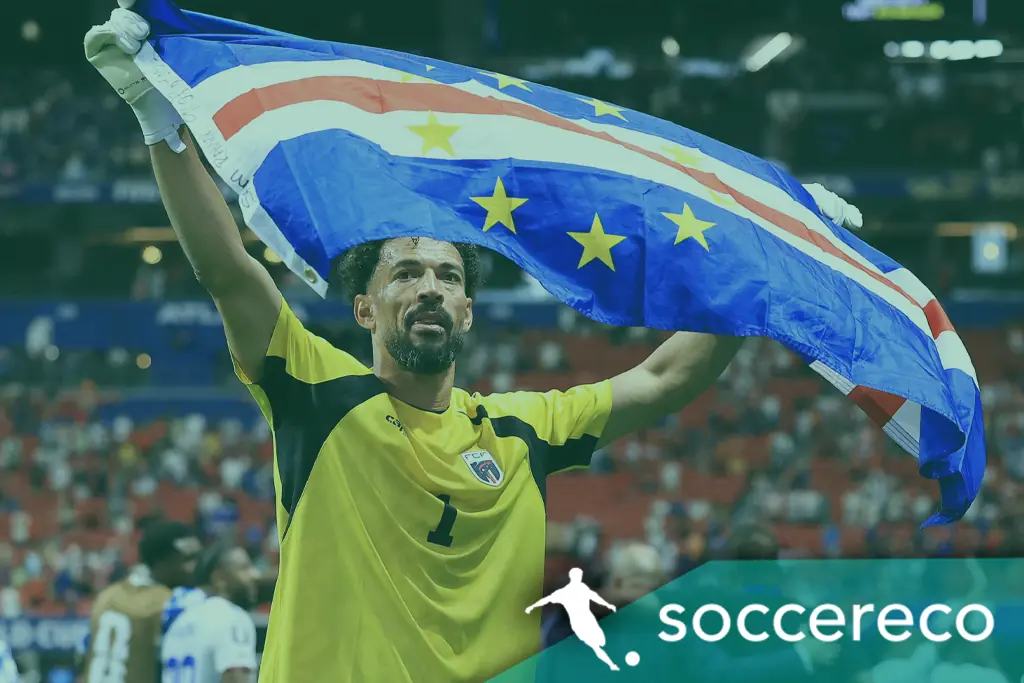
The great hero of the evening was Vozinha. At 40 years old, the Cape Verde goalkeeper produced the kind of performance that turns a player into a World Cup symbol. His saves were decisive, but his influence went far beyond the technical side of goalkeeping. He gave calm to the defence, confidence to the team and hope to every Cape Verdean watching around the world.
Vozinha made several spectacular interventions and seemed unbeatable when Spain finally found a way through the defensive block. His positioning was excellent, his reactions were sharp and his presence grew with every passing minute. For Spanish attackers, he became an obstacle that could not be overcome. For Cape Verde, he became the visible face of a collective dream.
By the end of the match, there was no doubt about the Man of the Match. Vozinha had earned that recognition with a display of experience, personality and courage. In a tournament often dominated by young stars and famous attacking names, this was a night that belonged to a veteran goalkeeper who understood the size of the moment and responded with one of the performances of his career.
Spain tried to change the direction of the match with attacking substitutions. The introductions of Lamine Yamal and Nico Williams added speed, creativity and one-against-one ability. On paper, those changes should have increased the pressure and opened cracks in the Cape Verdean structure. On the pitch, however, Cape Verde remained firm. The defensive block adjusted, the full-backs stayed alert, and the midfield continued to protect the central areas with impressive discipline.
That was one of the most impressive aspects of the performance. Cape Verde were not simply relying on luck. They were not just clearing the ball and hoping for the final whistle. They were reading danger, anticipating movement and forcing Spain into uncomfortable zones. Every duel mattered. Every interception mattered. Every second gained felt like another step towards a historic result.
For Spain, the draw was clearly a frustrating result. The Spanish team had the talent and the status, but Cape Verde made them look short of ideas in decisive moments. When Spain tried to move the ball through the middle, Cape Verde closed the spaces. When Spain attacked wide, Cape Verde covered the crosses. When Spain finally created danger, Vozinha was there. It became a match in which Spanish possession did not translate into Spanish control.
For Cape Verde, the 0-0 result felt much bigger than a single point. It was proof that they could compete on the World Cup stage. It was proof that their qualification was not just a romantic story. It was proof that organisation, heart and belief can reduce the gap between a debutant nation and a football giant.
The reaction from Cape Verdean media reflected that sense of pride. The tone was not only celebratory, but deeply emotional. This was a national team that had stood up to Spain, one of the biggest names in world football, and had refused to be intimidated. The Blue Sharks showed that they were not at the World Cup only to participate. They showed that they had come to compete.
After the final whistle, attention quickly turned to Vozinha and his sudden rise to global attention. Criolosports reported that only minutes after the match ended, the goalkeeper saw a huge increase in his social media following. Before kick-off, Vozinha had around 55,000 followers on Instagram. Shortly after the final whistle, that number had already passed 1.5 million. Later, it rose even further, reaching around 5.6 million followers.
That explosion of popularity showed the power of one World Cup night. A player who was already respected by Cape Verdean supporters became an international figure almost instantly. Fans from across the world discovered his story, his age, his performance and his role in one of the biggest surprises of the group stage. In modern football, a great performance can travel across the planet in minutes, and Vozinha became the perfect example of that.
There was something especially powerful about his story. At 40, Vozinha is not a rising prospect or a player being introduced to the world as the future of the game. He is an experienced goalkeeper who has lived through the long, demanding journey of professional football. That made the moment even more meaningful. His performance was a reminder that football still has room for late glory, for resilience and for players who wait years for one unforgettable night.
The draw also had a deep emotional impact beyond Cape Verde itself. The Cape Verdean diaspora celebrated the result with enormous pride, particularly in the Netherlands. Inforpress, the Cape Verdean news agency, paid special attention to the scenes in Rotterdam, where thousands of Cape Verdeans gathered to celebrate the draw against Spain.
The atmosphere in Rotterdam showed how powerful this national team has become as a symbol of identity. Supporters filled the streets with music, drums, brass instruments and flags, creating a celebration that was about more than football. It was about belonging. It was about family roots, shared memory and the pride of seeing Cape Verde recognised on the biggest sporting stage in the world.
Former Cape Verde international Jeffry Fortes had already predicted in an interview with VI that the match would be followed very closely in Rotterdam. He was right. The Cape Verdean community in the city turned the game into a collective event, and the final whistle released an explosion of emotion. A 0-0 draw became a reason for celebration because everyone understood the meaning behind it.
That is what makes this result so special. On paper, it was a goalless draw in the group stage. In reality, it was one of those World Cup moments that carry much more weight than the scoreline suggests. For Cape Verde, it was a night of recognition. For the players, it was confirmation that they belonged at this level. For the supporters, it was a memory that will be passed from one generation to the next.
The Cape Verdean team also changed the way future opponents will look at them. Before the match, some may have seen them as underdogs with spirit but limited chances against elite teams. After the draw with Spain, that view will no longer be possible. Cape Verde showed that they can defend with discipline, manage pressure, frustrate elite attackers and survive difficult moments without losing their tactical identity.
The next challenge will be different. After such an emotional result, the team must recover physically and mentally, because tournament football does not allow a team to live too long in one moment. The point against Spain is historic, but it must now become a foundation rather than a final achievement. Cape Verde have given themselves belief, but they have also raised expectations.
For Spain, the lesson is also clear. Talent alone is not enough in a World Cup group stage. Matches against well-organised and motivated opponents can become extremely complicated if the first goal does not arrive. Spain will need to find more variety, more speed and more precision in the final third if they want to avoid similar frustration in the next fixtures.
Still, the story of the night belonged to Cape Verde. It belonged to the defenders who fought for every ball, to the midfielders who closed spaces for 90 minutes, to the substitutes who helped protect the result, to the supporters who believed, and above all to Vozinha, the goalkeeper who became a national hero on the World Cup stage.
World Cups are remembered for goals, trophies and great attacking performances, but they are also remembered for nights like this. Nights when a smaller nation refuses to accept the role written for it. Nights when a debutant team stands against a giant and leaves the pitch with pride intact. Nights when a goalkeeper becomes a symbol and a country feels seen by the world.
Cape Verde did not beat Spain on the scoreboard, but in emotional terms, this result felt like a victory. The Blue Sharks earned respect, inspired their people and announced themselves to the tournament with a performance full of character. For a World Cup debut, it could hardly have been more powerful.