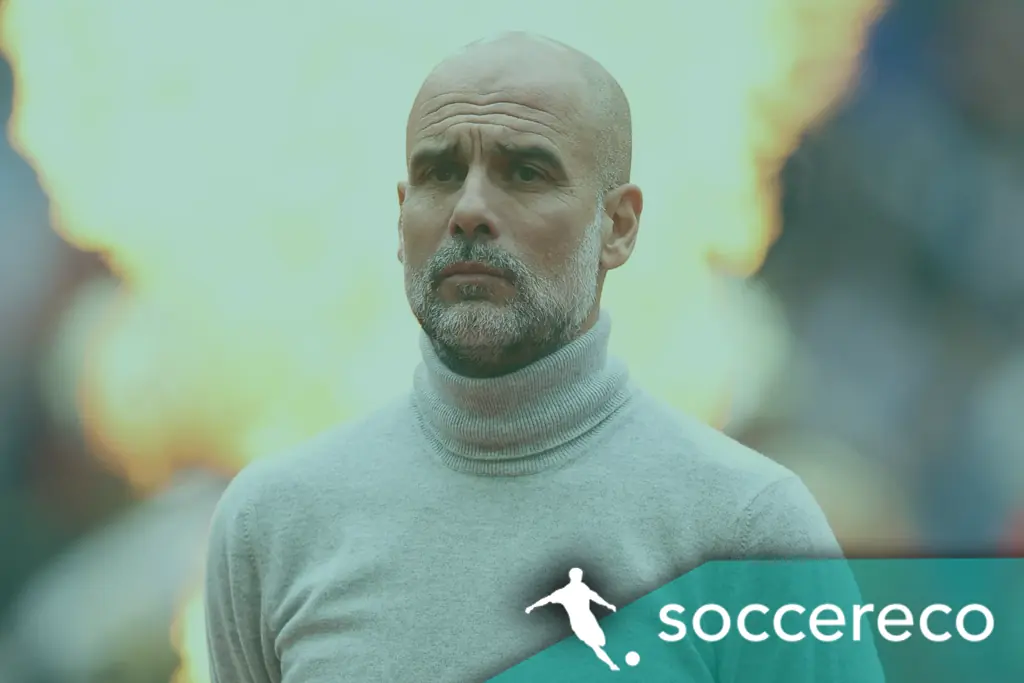
The impending departure of Pep Guardiola from Manchester City has caused quite a stir in the English media. Newspapers gave major coverage to the news that the 55-year-old Spaniard will leave Manchester after no fewer than ten seasons, with the BBC making a reference to Johan Cruyff.
End of an era as Guardiola exit talk dominates English media
The possible departure of Pep Guardiola from Manchester City has become one of the biggest talking points in English football, with several major newspapers treating the news as the beginning of the end of a historic managerial cycle. After almost 10 seasons in Manchester, the 55-year-old Spanish coach appears to be moving closer to the final chapter of a reign that changed not only City, but also the way English football thinks about dominance, control, pressing, positional play and long-term planning.
The Telegraph described the situation as the end of one of the most extraordinary managerial periods in football history, a line that captures the scale of what Guardiola has built since arriving in England. His time at City has been defined by trophies, records and tactical influence, but also by a sense that the club was operating with a clarity and consistency rarely seen at elite level. Under Guardiola, City became more than a winning team. They became a footballing reference point, a side copied, studied and often feared across Europe.
The signs of change have been growing in recent days. Last week, it became clear that two of Guardiola most trusted staff members would leave at the end of the season. Fitness coach Lorenzo Buenaventura and goalkeeping coach Xabier Mancisidor have both worked alongside him since the start of the Manchester City project and their exits are being interpreted in England as more than simple staff changes. For many observers, they suggest a broader transition behind the scenes, with the club preparing for a new phase after years of stability around Guardiola and his inner circle.
Those departures matter because Guardiola has always placed huge value on the people around him. His coaching team has not simply been a support structure, but part of the identity of the project. Buenaventura helped shape the physical demands that allowed City to maintain intensity across long seasons, while Mancisidor was part of the goalkeeping evolution that became central to the way Guardiola teams build from the back. Their exits naturally strengthen the feeling that City are preparing for a deeper reset.
Monday could now take on a symbolic meaning for Manchester City supporters. The club is due to hold a championship parade with an open-top bus, followed by a celebration at the Co-op Live Arena. What was planned as another moment of joy after another successful campaign may now also become a farewell event for the most important manager in the modern history of the club. For the fans, it could be a strange mixture of celebration and nostalgia, pride and uncertainty, gratitude and concern about what comes next.
Guardiola impact in Manchester is difficult to measure only through the number of trophies won. Since his arrival, City have transformed the standards required to compete at the top of English football. They have turned 90-point seasons into something almost normal, pushed rivals to extreme levels, and created a culture in which technical quality, positional discipline and relentless control became the foundation for success. Even opponents who criticised City dominance were forced to adapt to the level Guardiola imposed.
His influence also changed individual careers. Players such as Kevin De Bruyne, Bernardo Silva, Phil Foden, John Stones, Rodri, Ederson and many others developed within a system that demanded intelligence as much as talent. Guardiola often asked footballers to see the game differently, to understand spaces before receiving the ball, to defend through possession and to attack with patience. Some players took time to adapt, but those who succeeded became key parts of one of the most dominant sides English football has seen.
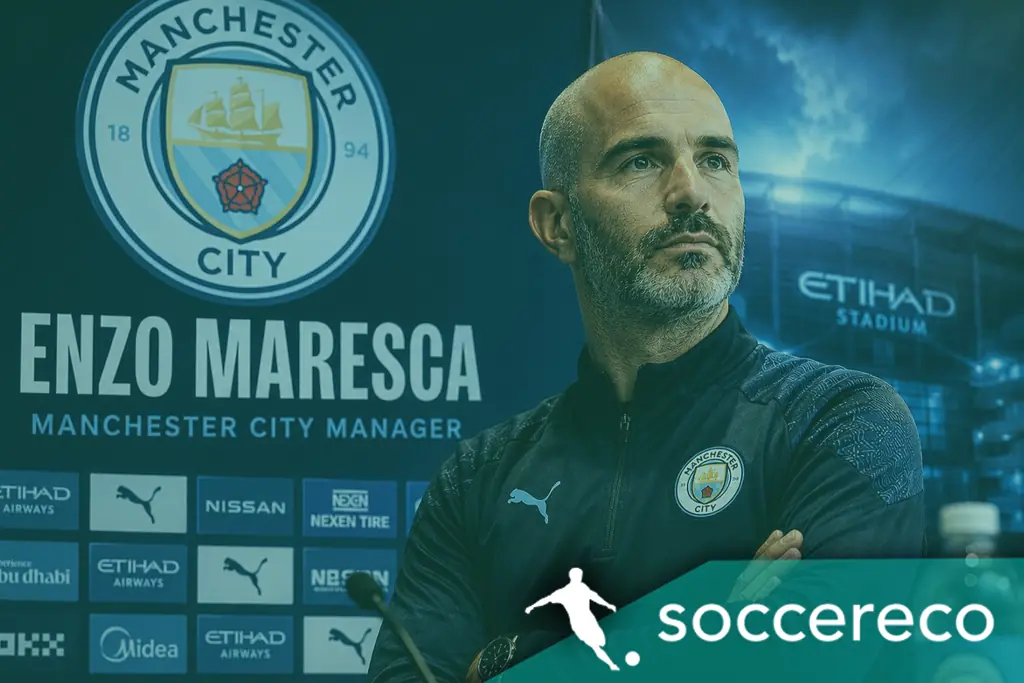
That is why the question of succession is so delicate. According to English media, Enzo Maresca is seen as the leading candidate to replace Guardiola if the Spaniard does leave. Maresca knows the City environment well, having worked inside the club structure before moving into senior management. His familiarity with the principles of positional play, his understanding of the demands of elite coaching and his connection to the Guardiola school make him an obvious name in the conversation.
However, The Telegraph warned that Maresca would face an almost impossible task if he became the next Manchester City manager. That assessment feels accurate. Replacing Guardiola is not simply about choosing another talented coach. It is about following a manager whose ideas have shaped an era, whose standards became part of the daily culture of the club and whose authority is almost impossible to replicate immediately. Whoever comes next will not only be judged on results, but also against the memory of a period that may never be repeated.
The challenge for City will be to protect continuity without pretending that everything can remain the same. The next coach will inherit a squad built around specific ideas, a club structure designed to support a particular footballing model and a fanbase accustomed to excellence. But he will also inherit pressure, comparison and the risk of emotional decline after the departure of a defining figure. Many great clubs have struggled after losing a legendary manager, not because the next coach lacked quality, but because the previous era had become too large to replace smoothly.
The BBC added another layer to the story by referencing Johan Cruyff, the man Guardiola has often described as his great mentor and inspiration. The connection is important because Guardiola career cannot be understood without Cruyff. At Barcelona, Cruyff shaped the footballing education of the young midfielder who would later become one of the most influential coaches of his generation. The ideas of space, courage, ball possession and identity that Guardiola carried to Barcelona, Bayern Munich and Manchester City all have roots in the Cruyff school.
Cruyff once said that winning matters, but having a style, making others copy and admire that style, is the greatest gift. That idea fits Guardiola better than almost any other modern manager. His legacy is not just that he won. It is that he convinced others to change. Coaches, academies, analysts and clubs across the world have borrowed from his methods. Full-backs moving inside, goalkeepers acting as playmakers, centre-backs stepping into midfield, wingers holding width, midfielders rotating through zones and teams pressing immediately after losing the ball all became more visible because of his success.
Of course, Guardiola has also divided opinion. Some critics argue that he has always worked with elite squads and enormous resources. Others point to the financial power of Manchester City as an essential part of the story. Those debates will continue, and they are part of the wider discussion around modern football. But even those who question the context of his achievements rarely deny the quality of the football, the depth of the tactical work or the consistency of the results.
For Manchester City, the coming weeks may therefore feel like the closing pages of a remarkable book. The club will want to celebrate what has been achieved, while also preparing supporters for a future that may look different. Guardiola has given City a global identity, a winning mentality and a footballing language that will remain after he leaves. The question is whether the club can preserve that identity without the man who made it so powerful.
If this is truly the end, English football is preparing to say goodbye to a manager who raised the bar for everyone around him. Guardiola arrived in Manchester with questions about whether his ideas would work in the Premier League. Almost 10 seasons later, the question has changed completely. Now the debate is not whether Guardiola could adapt to England, but whether English football can ever fully move on from the era he created.