Spanish newspapers wrote after Real Madrid defeat against Bayern Munich in the Champions League that there is still hope for the record European champions. Bayern did, however, make a strong impression in the Spanish capital.
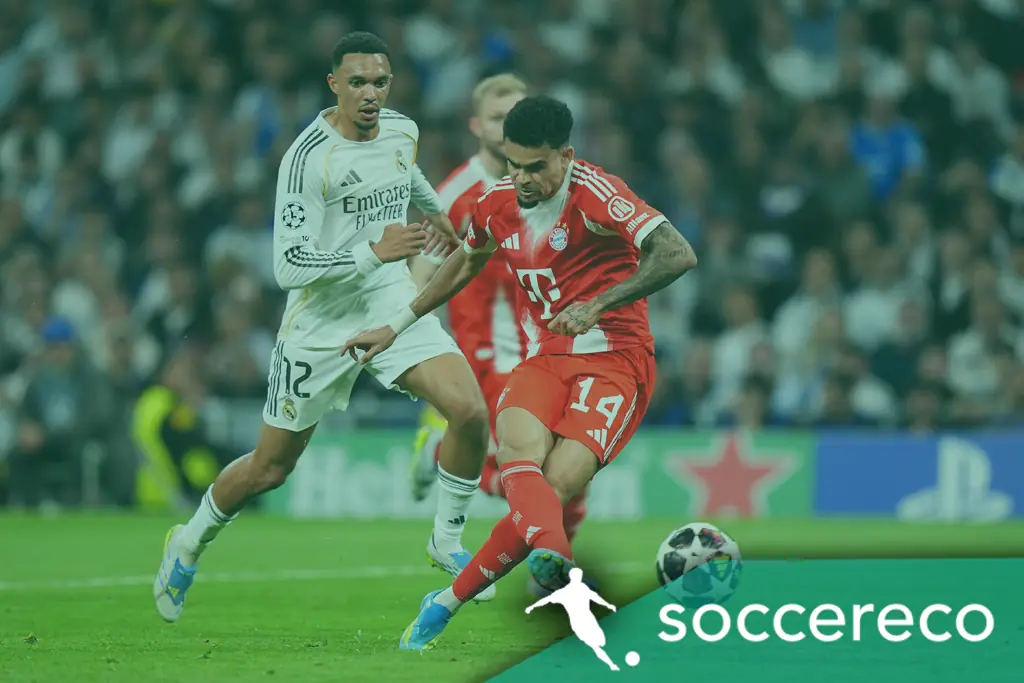
Real Madrid suffer at home against Bayern Munich but belief remains strong before the trip to Germany
Real Madrid suffered a 2-1 defeat at home against Bayern Munich on Tuesday night, yet the feeling across much of the Spanish press was not one of surrender. It was a painful result, especially at the Santiago Bernabeu, where European nights have so often belonged to the Spanish giants. Even so, the narrow scoreline, combined with the late sign of life provided by Kylian Mbappe, has kept the tie open and preserved the idea that this story may still have another dramatic chapter to come.
That is the essence of the reaction in Spain. Real Madrid were beaten, outplayed for long periods and exposed in several important areas of the match, but they were not eliminated. In a competition where the club has built a reputation for surviving when logic says otherwise, that single fact matters enormously. The defeat hurt, but it did not end the conversation. If anything, it intensified it.
There was a strong sense after the final whistle that Bayern Munich had left Madrid with more than just a victory. The German side left with authority, with confidence and with the impression of a team that had imposed itself at one of the hardest grounds in world football. Bayern looked physically sharper, tactically clearer and more stable for much of the contest. They appeared to have more control over the rhythm of the game and more conviction in the most important moments.
At the same time, Real Madrid left the pitch with more questions than answers. The performance was not convincing. The team struggled to build attacks with consistency, lacked fluency in possession and often seemed dependent on isolated bursts of speed rather than sustained footballing control. For a club of such stature, and on a night of such importance, that felt like a serious warning sign.
Marca highlights the force of the Bayern support
One of the most striking reactions came from Marca, which focused not only on the football itself but also on the atmosphere inside the stadium. The newspaper was especially taken by the impact of the Bayern supporters in the away end. According to its description, the travelling fans did not simply make noise. They made their presence felt in a physical way. Every coordinated jump, every collective movement, every surge of energy from the section occupied by the German supporters seemed to send a tremor through part of the stadium.
That image became one of the dominant metaphors of the night. Bayern did not merely win a football match. They shook the Bernabeu. The away support symbolised the confidence and intensity that the visitors brought with them from the first minute. It was a reminder that European ties are often defined not only by technical quality, but also by emotional force, belief and the capacity to seize the occasion.
Yet Marca went much further than describing the supporters. Its deeper point was more cutting. If the Bernabeu itself seemed to move under the pressure of the Bayern crowd, the true instability lay in the performance of Real Madrid. The newspaper argued that the sporting foundations of the team looked far less secure than the concrete structure of the stadium. That is a harsh assessment, but one that reflects the scale of disappointment surrounding the display.
From that perspective, Real Madrid were not kept alive by superior football. They were kept alive by pride, resistance, the energy of their own crowd and the speed and threat of Mbappe. That distinction is important. Pride can keep a team in a match. Individual quality can rescue a goal from a difficult situation. But if the collective game is not functioning, the margin for error becomes dangerously small.
A team searching for control
What made the defeat more concerning was not just the scoreline but the general pattern of the game. Bayern looked like the side with the clearer plan. They seemed more prepared to attack the weak points of their opponent and more comfortable managing transitions. Real Madrid, by contrast, often looked reactive rather than proactive. Instead of dictating the contest, they spent too much of it responding to Bayern pressure.
That does not mean Real Madrid were passive throughout. There were moments when they pushed forward with urgency, moments when the stadium tried to lift the team and moments when the match seemed ready to turn. Mbappe goal, in particular, injected a wave of hope into the night and changed the emotional direction of the tie. At 2-1, the damage was still serious, but no longer catastrophic. The goal transformed the second leg from an uphill mission into a challenge that still feels achievable.
That is why the mood around the club remains conflicted rather than defeated. There is frustration with the performance, concern about the balance of the team and acknowledgement that Bayern were better. But there is also an awareness that Real Madrid have built an entire European identity around these situations. Their history in the Champions League is full of nights when they looked vulnerable, compromised or second best, only to produce an unforgettable response when the pressure reached its highest point.
AS turns the defeat into a dramatic symbol
AS responded in the way only AS can, framing the situation through drama, imagery and myth. Its Gladiator comparison captured the strange aura that still surrounds Real Madrid in this competition. The team may be wounded, may be cornered, may be gasping for air, but in the imagination of many observers it is never truly finished until the final blow is delivered.
That narrative has followed the club for years. In ordinary football logic, repeated escapes are unsustainable. Teams that are outplayed eventually fall. Teams that rely too heavily on moments rather than structure eventually run out of answers. And yet Real Madrid have repeatedly broken those assumptions in Europe. They have made the improbable feel routine. That legacy explains why even after a home defeat, the tie is still spoken about as if it remains dangerously alive for Bayern.
The Gladiator image also reflects another truth about Real Madrid. The club draws power from symbolism. European nights at this level are not only tactical contests. They are also battles of confidence, heritage and psychological endurance. Real Madrid understand that as well as any club in the world. Even when they are not at their best, they know how to make an opponent feel that the job is not complete. Bayern may have won in Madrid, but the expectation of a difficult second leg remains strong precisely because of who the opponent is.
Mundo Deportivo sees flaws on both sides
Perhaps the most interesting reaction came from Mundo Deportivo. Even from Catalonia, where sympathy for Real Madrid is hardly automatic, there was recognition that the tie remains open. The paper accepted Bayern superiority on the night, but it also argued that the match showed limits in the German side as well. In other words, Bayern were better, but not untouchable. Real Madrid were disappointing, but not beyond recovery.
That is a significant point. In knockout football, superiority in one leg does not always guarantee qualification. Matches turn on small details, especially when the scoreline remains narrow. A missed chance, a defensive lapse, an early goal or a sudden shift in momentum can completely alter the balance of a tie. Mbappe goal ensured exactly that kind of volatility remains possible.
If Real Madrid can improve the structure of their play, reduce the spaces Bayern were able to exploit and find more sustained support for their attacking threats, then the narrative could change very quickly in Munich. Bayern have the advantage, but not the final word. They will know that a single mistake against a side with this kind of European record can reopen everything.
The importance of Mbappe
Mbappe emerged from the defeat as the figure carrying Madrid hope into the return leg. His speed, directness and capacity to create danger from almost nothing offer Real Madrid an escape route even when the team performance is below standard. That is a major reason why the tie is still discussed in terms of possibility rather than near elimination.
When collective fluency is absent, elite players become even more decisive. Mbappe gives Madrid the kind of weapon that can change a game in seconds. One run in behind, one loose ball, one transitional moment and the entire mood of a stadium can shift. Bayern experienced that in Madrid when the French forward scored and gave the home side a pulse at exactly the moment when the game threatened to drift away completely.
For the second leg, that threat will remain central. Bayern will know they cannot allow him space to accelerate or time to isolate defenders. Real Madrid, meanwhile, will know they do not need complete domination to stay in the tie. They need moments, and Mbappe is a specialist in creating them.
Munich now becomes the decisive stage
The first leg made one thing clear. Real Madrid cannot afford a repeat of the same overall performance if they want to progress. The emotional strength of the club is real, and its Champions League history is impossible to ignore, but history alone does not win return legs. Real Madrid will need more organisation, more precision and more courage on the ball. They will need to defend with greater clarity and attack with more support around their key players.
Bayern head into the second leg with the stronger performance behind them and the lead in their hands. That gives them reason for confidence, but it also places them under a different kind of pressure. They now carry expectation. They will have to finish the job against the one club that has made an art form out of surviving unfinished jobs in Europe.
That is why, despite the defeat at the Bernabeu, the dominant feeling in Spain is that this duel is still alive. Bayern were better and deserved their win. Real Madrid looked fragile and far from convincing. But 2-1 is not a collapse. It is a warning, a setback and a challenge. For most clubs, that might feel like the beginning of the end. For Real Madrid in the Champions League, it still feels like the start of another test of belief.
Munich awaits, and with it comes the latest chapter in the long European tradition of doubting Real Madrid too early. Bayern have placed themselves in a strong position and earned that advantage through a better display. Even so, the language around this tie remains shaped by one enduring idea: Real Madrid are never truly gone until the competition itself says so.