Peter Schmeichel has strongly criticised Portugal head coach Roberto Martínez. The former Danish goalkeeper sees parallels with the period in which the Spaniard was in charge of the Belgian national team, which Schmeichel believes Martínez ruined.
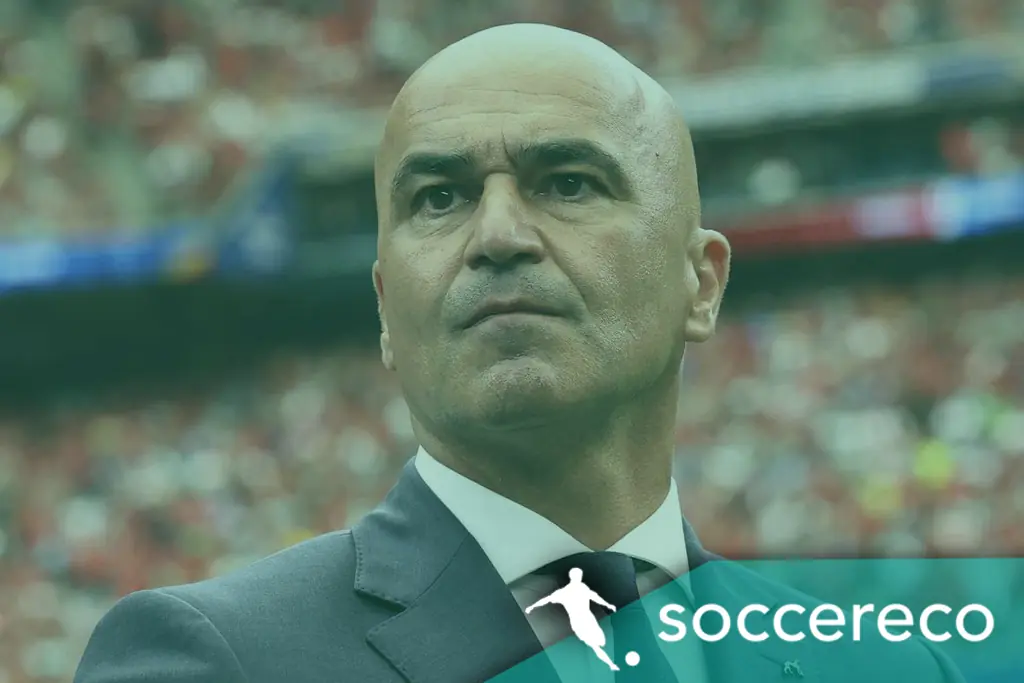
Portugal under pressure after disappointing World Cup start against DR Congo
Portugal began their World Cup campaign with a frustrating 1-1 draw against DR Congo on 17-06-2026, a result that immediately increased scrutiny on Roberto Martínez and raised uncomfortable questions about whether one of the most talented squads in the tournament is being used in the right way. On paper, Portugal arrived with ambition, experience and enough attacking quality to control matches against almost any opponent. On the pitch, however, the opening performance was flat, predictable and far from the level expected from a team widely viewed as one of the contenders to go deep in the competition.
The result itself was damaging, but the manner of the performance caused even greater concern. Portugal had long spells of possession, yet too often that possession lacked speed, variation and purpose. DR Congo defended with discipline, stayed compact when needed and found enough moments in transition to make Portugal uncomfortable. Instead of producing a statement performance at the start of the tournament, Martínez saw his side struggle to turn technical superiority into clear chances, leaving supporters and former players questioning both the tactical plan and the decision-making from the bench.
One of the strongest reactions came from Peter Schmeichel, who did not hide his disappointment after the match. The former Denmark goalkeeper, speaking on Danish television, was particularly critical of Martínez and drew a direct comparison with the Spaniard’s previous spell in charge of Belgium. According to Schmeichel, the same warning signs that surrounded Belgium under Martínez are now becoming visible with Portugal.
Roberto Martínez must be one of the most disappointing coaches of this World Cup, Schmeichel said. He ruined the golden generation of Belgium and now the same seems to be happening with Portugal.
It was a harsh assessment, but not an isolated one. Martínez has long divided opinion because of the gap between the talent available to him and the level of control his teams often show in major tournaments. During his time with Belgium between 2016 and 2022, he had access to an extraordinary generation of players, including Kevin De Bruyne, Eden Hazard, Romelu Lukaku, Thibaut Courtois, Jan Vertonghen, Toby Alderweireld, Axel Witsel and Dries Mertens. Belgium reached third place at the 2018 World Cup, which remains a strong achievement, but for many observers that squad had enough quality to win a major title. At the European Championship and in the 2022 World Cup, Belgium failed to take the final step, and the sense remained that a rare footballing generation had passed without the ultimate reward.
That is why Schmeichel’s criticism carries weight. His point was not simply that Portugal failed to beat DR Congo. His argument was that Martínez appears to be repeating a familiar pattern: managing a squad full of elite attacking players, but producing football that looks cautious, rigid and strangely limited. For a country with Portugal’s technical resources, the opening match felt less like a minor stumble and more like a warning about deeper structural problems.
The debate became even louder because of the players left on the bench. João Félix and Rafael Leão both remained unused or underused in a game where Portugal clearly needed more invention, more movement between the lines and more unpredictability in the final third. Schmeichel questioned how a coach could leave such creative and explosive players waiting while the team continued with an approach that was not creating enough danger.
How can you leave players like João Félix and Rafael Leão on the bench while sticking to a system that clearly does not work? Portugal have far too much attacking quality to look so predictable and cautious, Schmeichel said after the draw.
That criticism reflects the feeling of many supporters. Portugal are not short of options. They have players capable of carrying the ball, breaking defensive lines, creating from wide areas, pressing high and changing the rhythm of a match. Yet against DR Congo, the team often looked too slow in possession. The passing was safe rather than progressive, the midfield did not always connect naturally with the attacking line, and the final third lacked surprise. DR Congo could defend zones rather than constantly being pulled out of shape, which made the match more comfortable for them than Portugal would have wanted.
The most worrying aspect for Portugal was not just that chances were missed or that the opponent defended well. Those things can happen in tournament football. The concern was that Portugal did not look like a side with a clear attacking identity. There were moments of individual quality, but not enough collective fluency. The ball moved from side to side, but without enough acceleration. The forwards often received possession with their backs to goal or in crowded areas. The wide players were not consistently released into space. The midfield lacked the sharp vertical passing needed to unsettle a compact defence.
Schmeichel also pointed to the timing of Martínez’s substitutions, another issue that has followed the coach throughout his career. When a match is drifting, especially in a World Cup group stage opener, a manager has to sense the moment before the game slips away. Portugal needed changes earlier, not only to introduce fresh legs but to alter the emotional direction of the contest. Instead, the rhythm stayed largely the same for too long, allowing DR Congo to grow in confidence.
His tactics are too conservative, Schmeichel said. The attacking play lacks creativity, the midfield often looks disconnected from the forward line, and his substitutions usually come too late to change a match. Portugal have one of the strongest squads in this tournament, but they are not playing at the level they are capable of. If something does not change quickly, they will once again waste a golden chance to become world champions.
That final sentence is the one that will hurt most in Portugal. The idea of wasting a golden chance has deep emotional resonance for a squad that combines experienced leaders with players in their prime. This is not a team built only for the future. It is a team expected to compete now. Portugal have enough quality to dominate opponents, but tournament football rewards clarity, bravery and timing. If a manager waits too long to change a failing pattern, the damage can be immediate.
The discussion around Martínez is also inseparable from the role of Cristiano Ronaldo. At 41, Ronaldo remains one of the biggest names in world football and still carries enormous symbolic importance for Portugal. His presence influences opponents, attracts attention and gives Portugal a figure with unmatched experience in major tournaments. But against DR Congo, he struggled to impose himself. He did not consistently threaten the defensive line, he found it difficult to connect with the team’s attacking moves, and his performance became another major talking point after the final whistle.
Portuguese media reacted strongly, questioning whether Ronaldo should still be treated as an untouchable starter in matches where the tactical context demands different solutions. That does not erase his legacy or his ability to decide moments, but it does raise a practical question for Martínez: is Portugal being built around the best collective structure, or around reputations that make certain decisions harder?
Former footballer Chris Sutton was also critical of the situation, arguing that Martínez must show more authority when managing Ronaldo. His message was clear: the coach cannot allow the status of one player, no matter how iconic, to limit the team’s options.
Martínez does not dare to substitute him, Sutton said. He is not the manager. I do not understand some parts of his leadership style. Martínez must have the courage to be the manager.
That criticism cuts to the core of the issue. Managing Portugal at a World Cup is not only about choosing the best eleven names. It is about controlling the balance between history and performance, between loyalty and efficiency, between respect for a legend and the needs of the team in real time. Ronaldo can still be useful, but the manager must be able to make difficult decisions if the match requires more mobility, more pressing or a different attacking reference.
For Martínez, the pressure is now immediate. A draw in the opening match does not end a World Cup campaign, and Portugal still have time to correct their course. But the first performance has changed the tone around the team. What was supposed to be the beginning of a confident run has instead become a test of the coach’s adaptability. The next selection, the next tactical setup and the next substitutions will be analysed with far more intensity.
Portugal’s squad gives Martínez solutions. João Félix can bring imagination between the lines. Rafael Leão can stretch defences with pace and direct running. Other attacking options can increase intensity, combine in tighter spaces or offer more balance depending on the opponent. The problem is not a lack of talent. The problem is whether that talent is being released in a way that makes Portugal more dangerous.
DR Congo deserve credit for their performance. They were organised, brave and tactically disciplined, refusing to be intimidated by Portugal’s reputation. They understood that frustration could become their ally if the match remained tight. The longer Portugal struggled to find rhythm, the more belief DR Congo gained. Their draw was not only the result of Portuguese underperformance, but also of a focused and resilient display from an opponent that executed its plan well.
Still, Portugal will know that standards must rise quickly. World Cups often turn on small margins, and early warning signs cannot be ignored. The greatest teams usually respond to poor performances by making clear adjustments. They do not simply hope that individual talent will solve everything. If Portugal want to be viewed as genuine contenders, they need more speed in possession, more courage in team selection and a clearer attacking structure.
Martínez now faces the kind of moment that defines tournament coaches. He can insist that the opening match was only a bad day and continue with the same approach, or he can recognise that the criticism reflects real concerns. The strongest managers are not those who avoid criticism, but those who react before it becomes a crisis. Portugal still have the quality to recover, but the warning from Schmeichel will not disappear unless performances improve.
For now, the 1-1 draw with DR Congo has left Portugal with more questions than answers. The talent is there, the ambition is there and the expectation is enormous. What remains uncertain is whether Roberto Martínez can turn that potential into a team that plays with the conviction, creativity and authority required to win a World Cup. After the disappointment of the opening match, the pressure is already on.