Japan head coach Hajime Moriyasu produced a remarkable moment after the press conference. Following the draw against the Netherlands, he took one final moment to express his thanks to the Netherlands and to two Dutch people in particular.
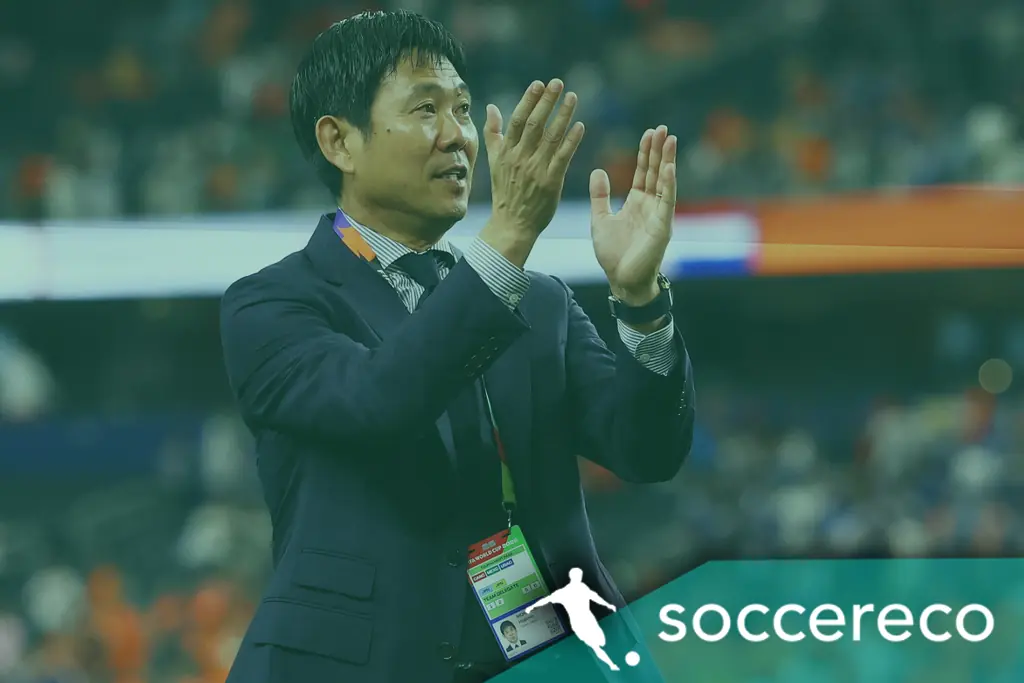
Moriyasu turns a post-match press conference into a tribute to Dutch football
Japan head coach Hajime Moriyasu created one of the most striking moments after the 2-2 draw between the Netherlands and Japan. The match itself had already offered enough talking points, with both teams sharing the result after an intense contest, but the most memorable scene came away from the pitch, inside the press room, when Moriyasu decided that the final question should not be the final moment of the evening.
After the last answer had been given and his press officer was already preparing to guide him away from the podium, Moriyasu paused. Instead of leaving immediately, he kept the press conference going for a little longer. His reason was clear. There were many Dutch journalists in the room, and the Japan coach wanted to use that moment to send a message of gratitude to the Netherlands.
Moriyasu said he wanted to thank the people in the Netherlands once again, making it clear that his words were not merely a polite gesture after an international match. His message carried a deeper meaning, because for Moriyasu, the connection between Dutch football and Japanese football is not something abstract or distant. It is part of his own football education and part of the wider development of the game in Japan.
The Japanese coach then referred to the major influence Dutch coaches have had on Japanese football over the years. He specifically mentioned Hans Ooft, the Dutch coach who served as Japan head coach between 1992 and 1993 and who also built a long coaching career in Japanese football. Ooft had previously worked with a Netherlands youth team before moving to Japan in 1987, where he remained active for around two decades and became an important figure in the football culture of the country.
For Moriyasu, Ooft was not just another foreign coach who spent time in Japan. He described him as a Dutch coach who helped educate him, while also underlining that he was far from the only Japanese football figure shaped by Dutch ideas. According to Moriyasu, many Japanese coaches worked under Dutch coaches, and that influence helped Japanese football develop.
A respectful message after a competitive draw
The timing of the message made the moment even more notable. Press conferences after international matches are usually dominated by tactical analysis, comments about individual players, refereeing decisions, missed chances and the immediate emotional reaction to the result. In this case, however, Moriyasu chose to step outside the normal rhythm of post-match football talk.
Japan had just drawn 2-2 with the Netherlands, a result that naturally invited analysis from both sides. For the Dutch, there would have been questions about control, defensive concentration and the way Oranje handled the Japanese approach. For Japan, the draw represented another opportunity to measure themselves against a traditional European football nation with a long history, a strong identity and a respected football culture.
Yet Moriyasu seemed to understand that the match was also part of a wider football relationship. By thanking the Netherlands and speaking about the influence of Dutch coaches, he turned a routine media appearance into a reminder that football development is often built through exchange, learning and long-term cultural contact.
That is why his comments stood out. They were not simply about the 2-2 scoreline. They were about memory, respect and the roots of Japanese football progress. Moriyasu used the platform to recognise people and ideas that helped shape the path Japan has followed over the past decades.
The Dutch footprint in Japanese football
Dutch football has long been associated with strong tactical education, technical detail, positional understanding and a clear view of how the game should be played. Those principles travelled far beyond the Netherlands, influencing clubs, coaches and national teams across different continents. Japan was one of the countries where that influence became especially meaningful.
Hans Ooft played an important role in that story. His work in Japan came at a period when the country was still building the foundations that would later support its rise as a serious football nation. The Japanese game needed structure, coaching knowledge, international perspective and a clearer competitive identity. Dutch coaches brought part of that knowledge, and Ooft became one of the names most closely associated with that development.
Moriyasu mentioning him by name showed how personal that legacy remains. It was not a vague diplomatic compliment. It was a direct acknowledgement of a coach who helped shape a generation and contributed to the football education of people who would later guide Japan from the bench, including Moriyasu himself.
His words also highlighted something important about Japanese football culture. Japan has often shown an ability to absorb ideas from abroad, adapt them and integrate them into its own football identity. The country did not simply copy Dutch football. Instead, it learned from Dutch coaching principles and combined them with Japanese discipline, collective organisation, technical ambition and tactical growth.
Moriyasu shows the human side of international football
In modern football, international matches are often judged quickly through results, rankings and short-term conclusions. A draw becomes a missed opportunity for one team, a positive result for another, or simply another step in a competitive campaign. Moriyasu reminded everyone that football also has a human and historical side.
His decision to stop before leaving the podium showed awareness and respect. He recognised the presence of Dutch journalists and understood that this was the right setting to express gratitude directly. In a room full of reporters from the Netherlands, after a match against the Dutch national team, the message carried extra weight.
It also offered a rare moment of sincerity in a setting that can often feel repetitive. Coaches frequently speak in controlled phrases after matches, protecting players, avoiding controversy and keeping their comments within safe boundaries. Moriyasu did something different. He chose to speak about influence, education and appreciation.
That made the moment memorable. It showed a coach who was not only thinking about the match that had just finished, but also about the people and football cultures that helped Japan reach this level. His comments connected the present Japan team with the coaches who contributed to the wider growth of Japanese football over many years.
A draw on the scoreboard, but a reminder of shared football history
The 2-2 draw between the Netherlands and Japan will be remembered for what happened on the pitch, but Moriyasu ensured that the evening also produced a meaningful story off it. His final words at the press conference gave the match a different dimension, turning a sporting result into a moment of recognition between two football cultures.
For the Netherlands, it was a reminder that the influence of Dutch football has travelled widely. For Japan, it was another sign of how far the national game has come, helped by years of learning, adaptation and international cooperation. Moriyasu made clear that Japanese football did not develop in isolation. It grew with the help of coaches, ideas and experiences from abroad, with the Netherlands playing a particularly important role.
By mentioning Hans Ooft and the wider group of Dutch coaches who worked with Japanese football figures, Moriyasu placed the result in a broader historical context. The draw against Oranje was not only a contest between two teams. It was also a meeting between a football nation with deep tradition and another that has built its own rise with respect, patience and international learning.
In the end, Moriyasu left the press conference having said more than most expected. He analysed nothing in detail, did not try to make the evening about himself and did not turn the result into a dramatic statement. Instead, he offered thanks. In doing so, he gave the post-match scene a warmth and sincerity that will likely be remembered as much as the 2-2 scoreline itself.