Liverpool played their best match in a long time against Olympique Marseille. That is the conclusion of the English media, who also see no signs that cracks are forming between Arne Slot and his squad.
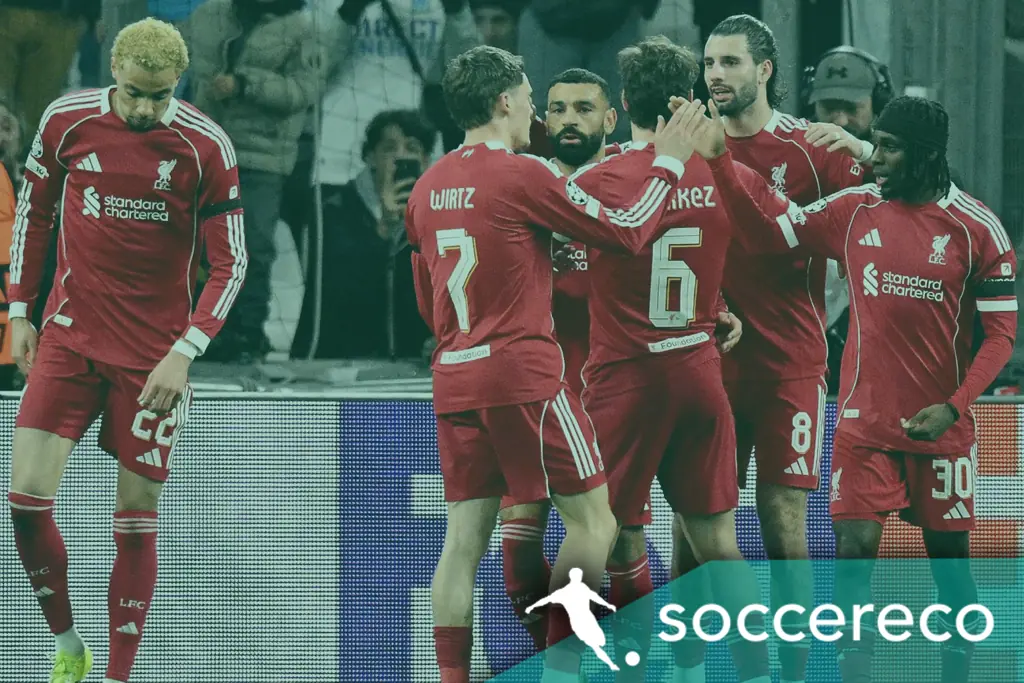
Liverpool’s emphatic 0-3 win away to Marseille was more than just a valuable Champions League result.
It was a statement performance, the kind that quiets noise quickly and forces a reset of the conversation around a manager. Only a few days earlier, Arne Slot had been dealing with significant criticism after a frustrating 1-1 draw with Burnley. The reaction around the club was familiar: questions about momentum, leadership, and whether the players were still fully aligned with the coach’s ideas. In Marseille, Liverpool answered all of it with their football.
The tone of the coverage in England reflected that shift immediately. Liverpool Echo described the performance as the opposite of a team drifting away from its manager, arguing that the intensity, organisation, and clarity on the pitch were clear proof that Slot still has the dressing room. The players did not look like a group going through the motions. They looked engaged, focused, and committed to executing a plan, particularly in a difficult away environment and against a Marseille side led by Roberto De Zerbi, a coach known for aggressive ideas and brave attacking structure.
It also helped that the win was convincing, not a narrow escape. Liverpool controlled key moments, defended with authority, and were ruthless when opportunities appeared. A 0-3 away scoreline in Europe does not happen by accident, and it rarely arrives without tactical discipline and emotional buy-in. It is precisely the sort of match that serves as a reference point for a campaign, especially when the club is fighting to stabilise results domestically and build credibility in Europe. Echo pointed to Liverpool’s position in the top four as further evidence that there are foundations for a serious run, and that the narrative of instability around Slot does not match the broader picture.
The wider media context made the result even more significant. Only days before the match, Slot had been confronted with questions about Xabi Alonso, which reportedly surprised him. Alonso had already been floated as a potential successor after his dismissal from Real Madrid, a situation that naturally attracted attention given his Liverpool history and the tendency of media cycles to create immediate alternatives whenever pressure rises. The timing of those questions was not ideal for Slot, but the Marseille performance gave him the strongest response possible: a big European night, away from home, executed with conviction.
Just as importantly, influential voices around Liverpool publicly backed Slot ahead of the match. Jamie Carragher and Steven Gerrard, two of the club’s most prominent icons, were supportive in the build-up and praised Slot’s tactical work against De Zerbi’s side. That kind of backing matters because it shapes the broader discourse. When respected former captains and leaders align behind the current manager, it becomes harder for criticism to evolve into genuine destabilisation. Marseille, then, became an opportunity not only to win a game, but to reframe the trajectory of Slot’s early period.
A major talking point from the match was how Slot structured the attack, particularly in relation to Mohamed Salah. Salah had raised doubts about his future in December after expressing dissatisfaction with a reduced role and time on the bench. Those comments inevitably sparked speculation and created a storyline around mood, status, and influence. After returning from Egypt’s Africa Cup participation, he reclaimed a place in the starting eleven, but the key detail in Marseille was not simply that he started. It was how Slot used him.
Rather than keeping Salah isolated wide, Slot positioned him higher and closer to goal, pairing him in the front line alongside Hugo Ekitike. The shape behind them also leaned heavily towards attacking intent, with Dominik Szoboszlai and Florian Wirtz deployed as advanced midfielders tasked with supporting progression and creating overloads. On the right side, Jeremie Frimpong was given licence to cover the entire flank, providing constant width and forward thrust. This configuration carried a clear logic: maximise Liverpool’s threat while reducing the defensive burden on Salah, whose limitations without the ball have been discussed more openly in recent months.
Steven Warnock, speaking to the BBC, highlighted exactly that point. He argued that the adjusted role benefits Salah because it removes much of the defensive responsibility that comes with playing wide. When Salah is stationed on the flank, he is typically asked to track back deeper and more often, and the repeated running can blunt his sharpness in the final third. By moving him inside and keeping him higher, Slot can preserve Salah’s energy for the moments that matter most: quick runs in behind, sharp movement around the box, and decisive actions near goal. Warnock also suggested that Slot may use this approach more frequently, because it allows Liverpool to protect Salah while still benefiting from his attacking instincts.
Salah himself had chances in Marseille and could have added to the scoreline. He had two opportunities to score but did not take them, which is why Liverpool Echo rated him a 7 rather than placing him among the very top performers. Even so, the assessment was not framed as criticism. The tone was that Salah is still building rhythm after returning and that his momentum will arrive naturally. In other words, he did not dominate the match, but he still looked like a player with an important role in the system, and the structure around him suggested Slot is designing solutions rather than forcing Salah into a role that exposes weaknesses.
If Salah’s story in Marseille was about adaptation and reintegration, Szoboszlai’s story was about control and leadership. The Hungarian midfielder was widely praised as the standout performer, earning an 8 from Liverpool Echo, alongside Frimpong and Milos Kerkez, the latter impressing as an adventurous full-back. Echo described Szoboszlai as a player who “ruled” the Vélodrome, and that impression was echoed by Sky Sports, which framed him as Liverpool’s current key figure. The suggestion was clear: Salah remains relevant and dangerous, but Szoboszlai is now the team’s central driver, the one imposing personality on the match.
That narrative gained even more traction because of the moment that effectively broke the game open. Just before half-time, Szoboszlai stepped up to take a free kick in a dangerous position and produced a clever finish, shooting low under the Marseille wall to put Liverpool deservedly in front. It was not only technically effective, it was psychologically decisive: scoring just before the interval changes the mood in the stadium, changes the instructions during half-time, and forces the home side to chase. In European away matches, those details are often the difference between managing a result and being dragged into chaos.
After the game, Szoboszlai explained the thinking behind the free kick when speaking to TNT Sports. He said he had done his homework and had been told that the shot under the wall was available if no Marseille player went down behind it. When that defensive detail did not happen, he took the option, and it worked perfectly. The quote also hinted at Liverpool’s preparation and the staff’s attention to small margins, which again reflects positively on Slot. These are not improvised moments. They are planned, discussed, and executed under pressure.
There was also an important interpersonal detail in Szoboszlai’s explanation: he had Salah’s permission to take the free kick. That matters because it touches on hierarchy and harmony. In teams with tension, set-piece responsibilities can become a subtle battlefield, particularly when star players feel their status is being challenged. In Marseille, the opposite was implied. Salah, even after earlier frustrations about his role, appeared aligned enough to allow Szoboszlai to take responsibility in a key moment. That is a small moment, but symbolically powerful.
From there, Liverpool’s performance continued to reflect structure and maturity. With the lead secured, they were able to control phases better, use their athleticism in wide areas, and punish Marseille when spaces opened. The full-backs, particularly in their forward movement, played a major role in stretching the pitch and sustaining attacks. Frimpong’s constant running on the right gave Liverpool an outlet and created repeated problems for Marseille’s defensive balance. Kerkez, praised for his attacking contributions, helped ensure Liverpool could attack from both sides rather than becoming predictable.
In the end, Marseille 0-3 Liverpool will be remembered as a match that did several jobs at once. It delivered a vital Champions League away win. It reinforced the idea that Slot still has full backing from his squad. It offered a tactical template that may shape how Liverpool use Salah in future fixtures. And it elevated Szoboszlai further as a central figure in this version of Liverpool, a player increasingly willing to take responsibility in big moments.
For Slot personally, the timing could hardly have been better. A single draw domestically can generate weeks of noise, particularly when the media has an alternative name ready to drop into the conversation. But a dominant European away performance changes the temperature instantly. Liverpool did not just win. They looked like a team with a plan, with belief, and with players prepared to execute under pressure. That is the most direct message a team can send about its manager, and in Marseille, Liverpool sent it clearly.