Manchester United has helped city rivals Manchester City back into the title race after a spectacular win over Arsenal. The London leaders still have a four-point lead over City after their third straight match without a win.
Today, Manchester United beat Arsenal 3-2 at the Emirates in a result that tightens the title picture and adds even more pressure on the London side after a third straight league game without a win.
Arsenal began on the front foot, pressing high and trying to pin United into their own half, but the match quickly turned into a story of momentum swings, sharp finishing, and a few key incidents that shaped the afternoon.
The opening phase belonged to Arsenal, who looked more aggressive in the duels and more direct in the final third. Their early intent was clear: win the ball back quickly, attack the wide areas, and test United with deliveries into the box. That approach was rewarded after just under half an hour, although not in the way Arsenal would have drawn it up. The move ended with the ball going into the net and it initially appeared that Jurriën Timber had supplied the decisive touch for 1-0. Replays, however, indicated that it was not Timber, but Lisandro Martínez, Timber's former teammate, who got the final contact and inadvertently turned the ball into his own goal. It was a moment of misfortune for United, but it also served as a reminder that Arsenal can force problems through sustained pressure and numbers around the penalty area.
United did not dwell on the setback for long. Rather than losing control, they steadied themselves, moved the ball with greater care, and began to find space as Arsenal's intensity dipped slightly. The equaliser arrived through a decisive moment that Arsenal will see as avoidable. Bryan Mbeumo made it 1-1 after profiting from a huge mistake by Martin Zubimendi, an error that invited pressure and gave United exactly what they wanted: a clean opening in a match that had previously demanded patience. In games at this level, individual lapses are often punished immediately, and United had the composure and quality to take advantage.
From that point on, the contest became far more open. Arsenal still tried to impose themselves, but United looked increasingly comfortable playing through midfield and breaking forward with purpose. The visitors carried more threat on the transition, moving the ball quickly into attacking zones and forcing Arsenal to run back towards their own goal. That shift in the rhythm of the game meant Arsenal could no longer dominate territory as easily, and it set the scene for the key moment early in the second half.
Shortly after the break, the travelling fans from Manchester United had even more reason to celebrate. United stitched together a lightning-quick combination involving Patrick Dorgu and Bruno Fernandes, and the move ended with Dorgu volleying a powerful finish in off the crossbar past David Raya to put United 2-1 ahead. The goal was not without controversy. Dorgu appeared to brush the ball with his arm in the build-up, but both the referee and the video assistant referee allowed the goal to stand. In matches of this magnitude, such decisions inevitably become talking points, and for Arsenal it was a double blow: the sting of conceding a brilliant goal combined with frustration at a moment they felt could have been judged differently.
Chasing the game, Arsenal needed a response in terms of tempo, control, and chance creation. Yet despite their effort, clear openings remained limited for long stretches. United defended with greater organisation after taking the lead, and whenever Arsenal did manage to work the ball into dangerous areas, they found Senne Lammens difficult to beat. The Belgian goalkeeper grew in stature as the match went on, dealing with balls into the box and intervening when Arsenal finally found routes to goal. For a team trying to rescue points at home, that combination of United resilience and goalkeeper assurance can feel suffocating.
By the fifty eighth minute, Arsenal manager Mikel Arteta had seen enough and moved decisively to change the pattern of the match. He made a quadruple substitution, introducing Ben White, Victor Gyökeres, Mikel Merino and Eberechi Eze in a clear attempt to add freshness, variation, and a sharper edge in the final third. The changes suggested a desire to increase both physical presence and creativity, and to offer new angles against a United side that was increasingly set in its defensive shape. However, even with the new quartet on the pitch, Arsenal struggled to generate sustained periods of high quality chances. They had more possession and urgency, but the final pass, the final touch, and the quality of the shots did not consistently match the level of the occasion.
As is often the case when open play does not deliver, Arsenal leaned into a familiar strength: set pieces, and in particular corners. Bukayo Saka delivered a sharp corner into the danger area, and after a brief scramble Merino forced the ball over the line to make it 2-2. The goal injected belief back into the stadium and gave Arsenal a route to salvage at least a point. It also underlined a persistent reality in tight games: even when a team finds it hard to break down a well-organised opponent, dead ball situations can level the contest in an instant.
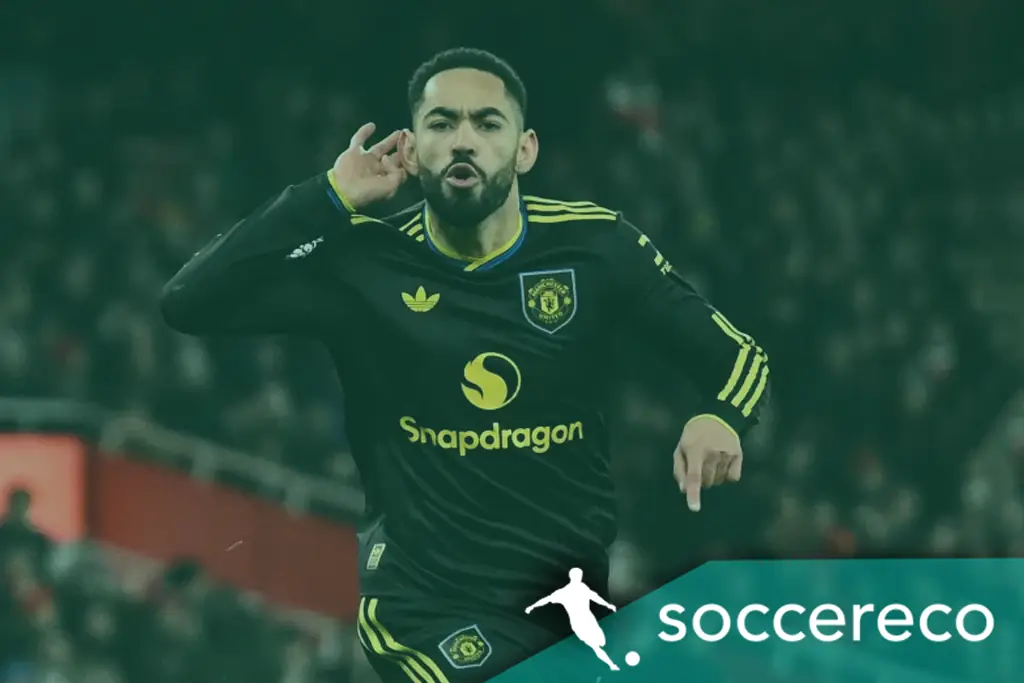
But if Arsenal thought the equaliser had swung the game permanently in their favour, United responded with speed and ruthlessness. Just three minutes later, United were celebrating again as substitute Matheus Cunha struck a superb effort from outside the penalty area. It was the kind of goal that changes the emotional temperature of a match immediately. Arsenal had worked hard to claw their way back to parity, and then, almost before they could reset, they were behind again at 3-2. For United, it was a statement of quality and confidence, and a perfect illustration of how valuable bench impact can be in the decisive moments.
The closing stages were tense, with Arsenal pushing forward and United trying to manage the game intelligently. Seven minutes of stoppage time offered Arsenal a final window to rescue something, but they were unable to prevent defeat. The fact that Arsenal could not turn late pressure into another goal will be a concern, particularly given the recent sequence of results. After earlier draws against Liverpool and Nottingham Forest, this defeat marks a third consecutive league match without a victory, and it has consequences at the top of the table. Manchester City, as the nearest challengers, have moved to within four points, keeping the title race very much alive at a moment when Arsenal would have preferred to create breathing space.
For United, the result carries major significance beyond the headline win at the Emirates. Under Michael Carrick, the team continues to build momentum, and this victory lifts United above both Liverpool and Chelsea, pushing them into the top four. It is a tangible reward for a performance that combined recovery after an early setback, efficient use of key moments, and the composure to strike again immediately after being pegged back. Winning away against direct rivals, and doing so in such dramatic fashion, is the kind of result that can shape a season.
From Arsenal's perspective, the immediate priority will be controlling the narrative around both performance and decision-making. They showed energy early, they fought back late, and they again demonstrated their threat from corners, but they were also punished for a costly error, and they conceded at moments when game management becomes crucial. With the margin at the top now reduced, the next fixtures take on even greater importance, because the pressure of being chased can often feel different from the confidence of leading.