The 2026 World Cup begins tonight with Mexico vs South Africa, launching the biggest edition ever with 48 teams and global attention.
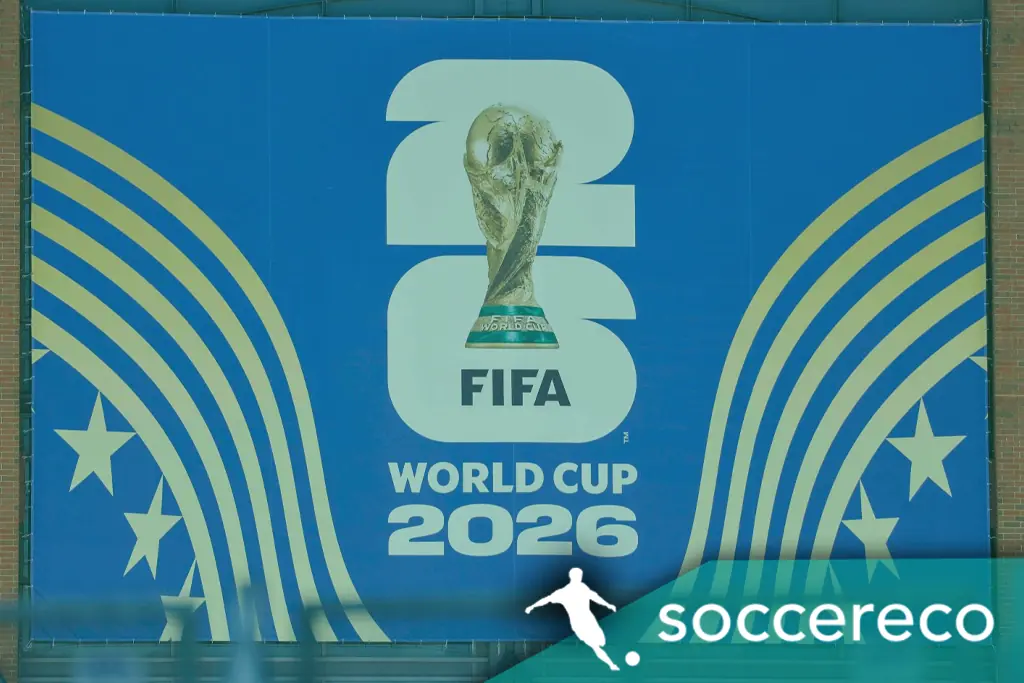
The biggest World Cup in history begins tonight
It is tonight, at 8:00 p.m. Portuguese time, that the 23rd edition of the FIFA World Cup finally gets underway. Mexico and South Africa will have the honour of opening a tournament that is not just another chapter in the history of football, but a clear symbol of how much the game has grown, expanded and transformed over the last few decades. The setting is North America, the stage is global, and the feeling is unmistakable: this is the biggest World Cup 2026 ever.
Mexico, one of the three host nations alongside the United States and Canada, begins the competition carrying the emotional weight that always comes with playing at home. South Africa, meanwhile, enters the opening night with the privilege and responsibility of facing the host nation in front of millions of eyes around the world. Opening matches are rarely normal games. They are ceremonies, statements and emotional tests all at once. They set the tone, create the first images of the tournament and offer the first real answer to the question that follows every World Cup: who is ready for the pressure?
This edition marks a historic break with the past. For the first time, 48 national teams are taking part, a 50 percent increase compared to the 32-team format that defined every World Cup of this century until now. Before that, between 1982 and 1994, the tournament had only 24 teams, at a time when reaching the finals was an even more selective achievement. In those days, the World Cup felt like a closed room reserved almost exclusively for the strongest football nations. Now, the door has been pushed much wider open.
That change is not merely numerical. It changes the geography, the rhythm and the meaning of the competition. More countries means more flags, more languages, more styles of play, more supporters travelling across continents and more stories that would previously have stayed outside the tournament. It also means that nations with growing football structures, but without the historical weight of the traditional powers, now have a more realistic path to the greatest stage in the sport.
In that sense, this World Cup is more democratic. It is not democratic in the romantic sense that everyone can win it, because football history still tells us that the trophy usually ends up in the hands of the strongest, deepest and most experienced squads. But it is democratic because more countries are allowed to experience the event from the inside. More players will hear their national anthem at a World Cup. More children around the world will watch someone from their own country appear on the biggest football broadcast on the planet and think that such a dream is no longer completely distant.
There is, however, one major reminder that qualification remains ruthless: Italy are not here. One of the great football powers, four-time world champions and a country whose football culture is woven into the history of the tournament, have once again failed to qualify. In a competition expanded to 48 teams, that absence becomes even more striking. It is almost impossible to speak about the enlarged World Cup without mentioning the irony that, even with more space available, one of the giants of the sport still managed to miss out.
The expansion also reflects the commercial and cultural force of modern football. FIFA is not creating demand out of nothing; it is responding to a sport that continues to grow in almost every corner of the planet. The World Cup is no longer just a football tournament. It is a television event, a digital event, a tourism event, a social media event and a collective ritual followed by people who may not watch club football every week but still stop when their country plays.
Around five billion people are expected to follow the tournament in some form. Some will watch every match. Others will only follow highlights, results, social media clips, debates or the games involving their own national team. But that is exactly the point: the World Cup has become too large to be measured only by traditional audiences. It lives on television, mobile phones, fan zones, cafés, workplaces, family homes and conversations between people who may disagree about everything else but still understand the emotional language of football.
Even the old habits around the competition have grown. Sticker collections, shirts, retro kits, fantasy games, predictions, debates and tactical analysis have become part of the wider World Cup economy. What once felt like a month of football now feels like a global season of anticipation, consumption and discussion. FIFA, naturally, has followed that movement. The governing body understands that more teams and more matches mean more markets, more supporters, more broadcasters and more commercial opportunities. But it also means more football for the millions who simply want the tournament to last longer and include more of the world.
From a sporting perspective, the debate is more complex. Critics of the 48-team format argue that the tournament may lose some of its elite edge, especially in the group stage. There is a fear that expansion could create more one-sided matches, reduce the tension of qualification and reward quantity over quality. Those concerns are not without logic. The World Cup built much of its mystique on scarcity. Getting there was hard. Escaping the group was hard. Every mistake felt expensive.
Yet football has a habit of resisting predictions made on paper. Smaller nations often arrive with more hunger, more organisation and more emotional freedom than expected. Some of the most memorable World Cup stories have come from teams that were supposed to be passengers and became protagonists. The expanded format gives more room for those stories. It gives more countries the chance to surprise, to suffer, to grow and to leave a mark that goes beyond the final standings.
The physical burden on the eventual champions will increase, but not dramatically. Whoever reaches the final will now play eight matches instead of seven. In isolation, that may seem like a small difference. In modern football, however, one extra match at the highest intensity can matter. Many players arrive at the World Cup after exhausting club seasons, with domestic leagues, continental competitions, long travel schedules and limited recovery time already in their legs. The team that lifts the trophy will not simply need talent. It will need squad depth, medical management, emotional control and the ability to survive different types of games.
That may be one of the defining features of this World Cup. Winning it will be less about having only the best starting eleven and more about having the best group. Coaches will need to rotate without weakening the team, manage stars without losing authority and protect key players without compromising results. The old World Cup formula of a settled eleven may no longer be enough. In an eight-match path to glory, benches, substitutes and tactical flexibility can decide careers.
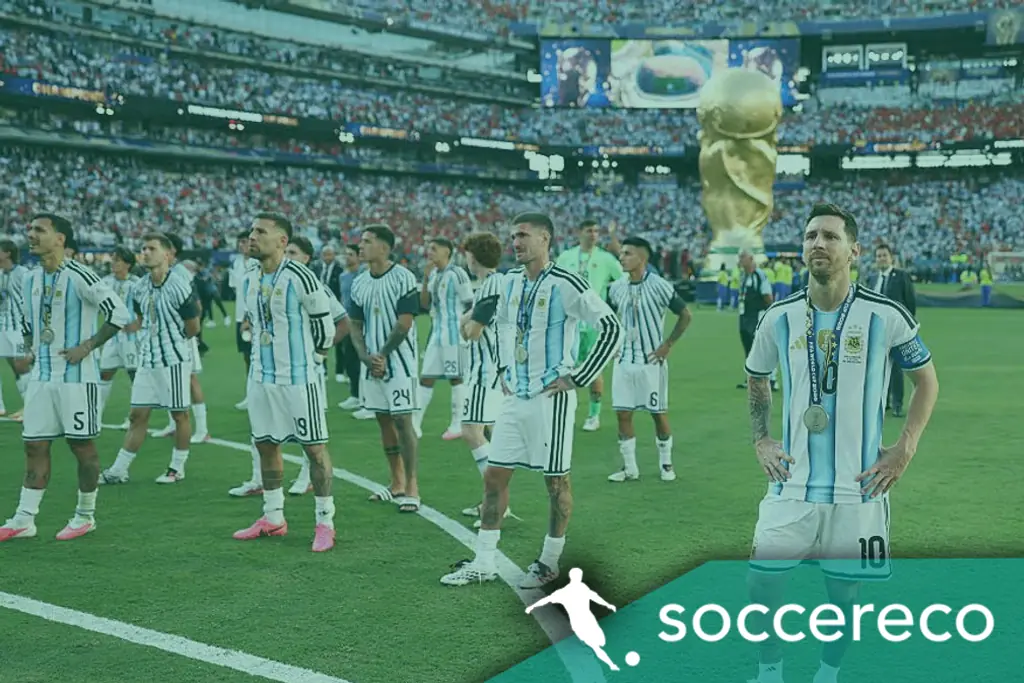
The favourites, however, remain familiar. Brazil and Argentina arrive, as they almost always do, with the weight of history and expectation. Brazil carry the eternal demand for beauty and victory, a combination that no other nation has had to carry quite so heavily. Argentina, still living under the aura created by their recent golden period, know that every World Cup after a triumph becomes a test of legacy as much as talent.
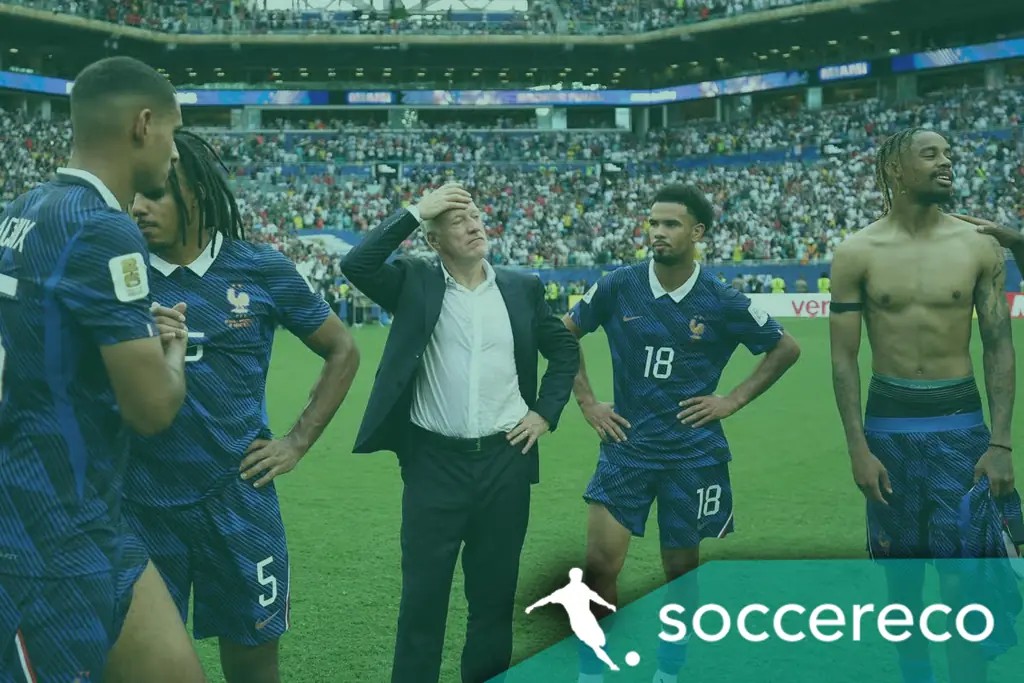
Europe brings its usual army of contenders. France have the athletic power, depth and tournament experience that make them dangerous in any era. Spain continue to produce footballers of extraordinary technical intelligence and now combine youth, confidence and a renewed sense of identity. England, with one of the strongest generations in their modern history, remain under pressure to turn promise into a major global title. Germany, even when questioned, can never be treated as ordinary in a World Cup context. Their history alone demands respect, but history is not their only weapon.
Then there is Portugal, now firmly placed among the serious candidates. For years, Portugal were admired for individual talent but not always feared as a complete tournament machine. That has changed. The national team has won three major trophies in the last decade, one European Championship and two Nations League titles, and has developed the mentality of a side that no longer enters major competitions simply hoping to surprise. Portugal now arrive expecting to compete with anyone.
This may be the strongest generation Portuguese football has ever produced. There is quality in almost every sector, from defence to midfield, from wide areas to the final third. Many of the players represent some of the biggest clubs in Europe, are used to Champions League pressure and understand the rhythm of elite football. Portugal no longer depend on one star to solve every problem, even if one star continues to dominate the emotional landscape.
Cristiano Ronaldo reaches this World Cup at the age of 41, in the final stretch of one of the greatest careers football has ever seen. He is no longer the same explosive force who once destroyed defenders with pure acceleration, but reducing him to age would be a mistake. His finishing, positioning, competitive instinct and sense of timing remain part of his identity. Players like Ronaldo do not need to control 90 minutes to influence a match. Sometimes they only need one cross, one rebound, one hesitation from a defender or one moment when the box becomes theirs.
For Portugal, the challenge will be balance. The team must respect what Ronaldo still offers without becoming trapped by what he once was. That is one of the most delicate questions of the tournament. If managed well, his presence can be a weapon, a source of belief and a final chapter worthy of his international career. If managed poorly, the story can become heavier than the football itself. Great teams know how to honour legends while still moving according to the needs of the present.
Portuguese interest in the tournament does not end with the national team. There are 25 players from Portuguese clubs competing in North America, with Sporting and Benfica leading the way with seven players each. That presence reinforces the status of Portuguese football as a market that develops, attracts and prepares players for the highest international level. The domestic league may not have the financial power of the Premier League, La Liga or the Bundesliga, but its influence remains significant.
There are also several players who were in Portugal last season and have since moved elsewhere, including names such as Fofana, formerly of FC Porto, and Otamendi, formerly of Benfica. Their presence adds another layer of interest for Portuguese supporters, who will recognise familiar faces across different national teams. In many ways, the World Cup becomes a mirror of the Portuguese league itself: international, competitive, export-driven and full of players whose careers pass through Portugal before reaching other stages.
That is one of the beauties of the tournament. It allows supporters to follow football through different emotional paths. Some will watch only Portugal. Others will follow the players from their club. Some will support underdogs. Others will track the great stars, the tactical trends, the young talents or the possible future transfers. The World Cup is not one story. It is dozens of stories unfolding at the same time.
The opening match between Mexico and South Africa is therefore much more than the first fixture on the schedule. It is the beginning of a new era for the tournament. A larger World Cup, a wider World Cup, a World Cup spread across three countries and built for an audience that no longer consumes football in just one way. It is also a test of whether bigger can still mean better, whether expansion can preserve intensity and whether the magic of the competition survives when the format changes.
There will be doubts, as there always are. Some will say there are too many teams. Others will argue there are too many matches. Some will miss the old format, the old rhythm and the old sense of exclusivity. But once the ball starts rolling, football usually takes control of the debate. A goal, a mistake, a save, a late winner or an unexpected hero can change the mood of an entire tournament in seconds.
Tonight, the arguments pause and the game begins. Mexico and South Africa step onto the pitch carrying not only their own ambitions, but also the symbolic weight of a World Cup that wants to be larger than any before it. From now until the final, the world will watch, judge, celebrate, complain, dream and suffer. That is what the World Cup does better than any other sporting event. It turns football into a shared global language.
Bigger than ever, yes. More demanding than ever, certainly. But still built around the same simple promise that has made the tournament irresistible for nearly a century: 90 minutes, one ball, two teams and the possibility that something unforgettable might happen.