Turkey suffer a painful 2026 World Cup exit after defeats to Australia and Paraguay, with Arda Guler apologising to fans for a disappointing campaign.
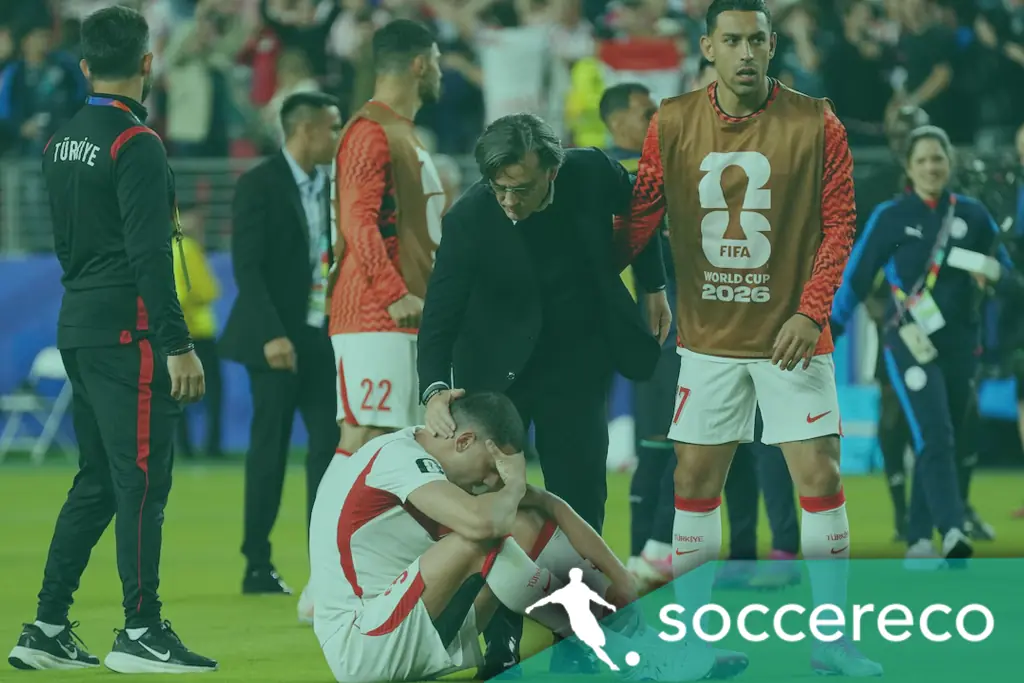
Turkey Face Painful World Cup Exit After Another Flat Display
Turkey are already one of the major disappointments of the 2026 World Cup, and their campaign has now reached a painful conclusion in Group D. After opening the tournament with a 2-0 defeat against Australia, the side coached by Vincenzo Montella suffered another damaging result, losing 1-0 to Paraguay and confirming that they can no longer avoid finishing bottom of the group.
It is a hugely disappointing outcome for a team that arrived at the tournament with ambition, individual talent and the feeling that this generation could at least compete with personality on the biggest international stage. Instead, Turkey leave the group phase with frustration, regret and a strong sense that the team failed to show its real level when the pressure was highest.
The defeat against Paraguay was another example of a team unable to turn possession, technical quality and attacking intent into clear authority on the pitch. Turkey never looked fully comfortable after conceding early, and although there was time to react, the response lacked the conviction and control expected from a squad filled with players from major European clubs.
For Vincenzo Montella, this World Cup will inevitably raise difficult questions. The Italian coach has tried to build a side capable of playing with intensity, courage and technical confidence, but in this tournament Turkey looked heavy, nervous and short of solutions. The early goal against Paraguay created exactly the kind of match scenario that exposed the teams biggest problems: emotional instability, lack of attacking clarity and an inability to impose rhythm when chasing the game.
Arda Guler Admits Shame After Turkeys Elimination
Arda Guler, one of the most talented players in the squad and currently representing Real Madrid, did not try to hide the scale of the disappointment after the final whistle. The young midfielder spoke with visible frustration, accepting that Turkey had fallen far below expectations and admitting that the players had failed to match their reputation with performances on the pitch.
I will do everything in my power to make sure this tournament is forgotten throughout my career with the national team. We play for very important clubs and we should have shown that on the pitch. We did not manage to do that, we were not capable. We conceded a very early goal. There is not much to say, he said after the match.
His words reflected more than the disappointment of a single defeat. They carried the weight of a tournament that quickly slipped away from Turkey, a campaign in which the team never found confidence, never found consistency and never gave supporters a moment to believe that a turnaround was coming. For a player like Guler, still young but already seen as a symbol of the future of Turkish football, the frustration was understandable.
Turkey did not arrive at the World Cup without hope. The team had technical players, attacking options and a passionate fan base expecting a competitive campaign. But football at this level punishes hesitation, and Turkey were too often reactive instead of assertive. Against Australia, they struggled to cope with the physical and tactical demands of the match. Against Paraguay, they again found themselves behind early and were unable to produce the kind of response that defines mature teams.
A Squad With Talent, But Without Answers
The most painful part of this elimination is that Turkey do not lack individual quality. Several players compete in strong leagues, many are used to high-pressure environments, and some already carry important responsibilities at club level. That is why Arda Gulers comments feel especially significant. When he says that the players represent big clubs and should have shown that, he is not just apologising to fans. He is acknowledging a gap between reputation and performance.
In international football, talent alone is rarely enough. Teams need structure, emotional control, tactical discipline and the ability to suffer together when matches become difficult. Turkey showed flashes of technical ability, but not enough collective strength. Once matches turned against them, the side often appeared to lose its composure, forcing passes, rushing attacks and failing to build sustained pressure.
The early goal conceded against Paraguay changed the entire rhythm of the match. Instead of controlling the game with patience, Turkey were pushed into a chase. That chase became increasingly desperate as the minutes passed. Paraguay defended their advantage with organisation, protected key areas and made it difficult for Turkey to find clean routes into dangerous positions.
Turkey had moments where they tried to increase the tempo, but the final pass was missing, the decision-making in the final third was inconsistent, and the team never truly managed to turn pressure into panic for the opponent. That lack of cutting edge has been one of the main themes of their World Cup campaign.
Montella Under Pressure After Group D Failure
Montella will now face intense scrutiny. Tournament football is often cruel because there is very little time to correct mistakes, but the manner of Turkeys elimination will make the analysis even harsher. Finishing bottom of Group D is not just a poor result; it is a symbolic failure for a national team that expected to show more personality, more maturity and more competitive strength.
The coach will have to explain why Turkey looked so fragile after setbacks, why the team struggled to create enough high-quality chances, and why key players were unable to influence matches in the way supporters had hoped. Some of those problems belong to the coach, but others belong to the squad as a whole. At a World Cup, responsibility is always shared.
There will also be debate about whether Turkey were mentally prepared for the tournament. The technical level of many players is not in doubt, but the emotional response during the two defeats was not convincing. When teams concede early in major tournaments, the best sides remain calm and trust their structure. Turkey seemed to become impatient, and that impatience made the task even harder.
For Montella, the coming weeks could define the next stage of his work with the national team. Turkey must now decide whether this campaign was an isolated collapse or evidence that deeper changes are needed. Either way, the disappointment will not disappear quickly.
Guler Sends Apology To Turkish Supporters
Arda Guler also made a direct apology to the fans, recognising the emotional impact of such a poor campaign. Turkish supporters are among the most passionate in international football, and expectations around this generation had grown because of the quality of several young players. The tournament was supposed to be a stage where Turkey could show progress. Instead, it became a painful reminder of how far the team still has to go.
We are very sad and ashamed. We apologise to all our fans. In the next tournaments, we will give our best. We play for big clubs and we should have shown that, he added, as quoted by Marca.
The apology will matter to supporters, but it will not erase the frustration. Fans expected a team with fight, organisation and ambition. What they saw was a side that never truly settled into the competition. The disappointment is not only about the defeats, but about the lack of a convincing reaction after things started badly.
For Guler personally, this tournament could become an important lesson. He remains one of the brightest talents in Turkish football, but the World Cup has shown how demanding international football can be. Matches are decided by small details, emotional control is essential, and even the most gifted players need a collective structure around them to shine.
A Tournament Turkey Will Want To Forget
Turkeys 2026 World Cup campaign will be remembered for the wrong reasons. Two defeats, no escape from last place in Group D and a feeling of underachievement that will follow the national team long after the tournament ends. The loss to Australia damaged confidence, and the defeat against Paraguay confirmed the scale of the failure.
What makes the disappointment even greater is that Turkey did not look like a team with no resources. They looked like a team that had the tools but could not use them properly under pressure. That is often more painful than simply being outmatched. Supporters can accept defeat when a team fights to its limit, but it is harder to accept when the side appears unable to express its own quality.
The next challenge for Turkey will be turning this frustration into something constructive. The national team still has talent, and players like Arda Guler can be central figures for years to come. But talent must now be matched with stronger mentality, clearer tactical identity and a more reliable competitive edge.
This World Cup is over for Turkey in the worst possible way, but the reaction from here will matter. Arda Guler has already made it clear that he wants this tournament to become something forgotten in the wider story of his international career. For that to happen, Turkey will need more than words. They will need a serious response, better performances and a national team capable of proving that this failure was not the true measure of its potential.